

I love deviled eggs for a party because they look like you fussed, but they are secretly one of the most make-ahead friendly appetizers on the planet. The trick is knowing what to prep early and what to hold until the last minute so you get that creamy filling, bright flavor, and tidy little egg whites that do not weep all over your platter.
Here is my no-stress timeline for making deviled eggs ahead, plus the storage details I wish someone had handed me before my very first holiday mixer.
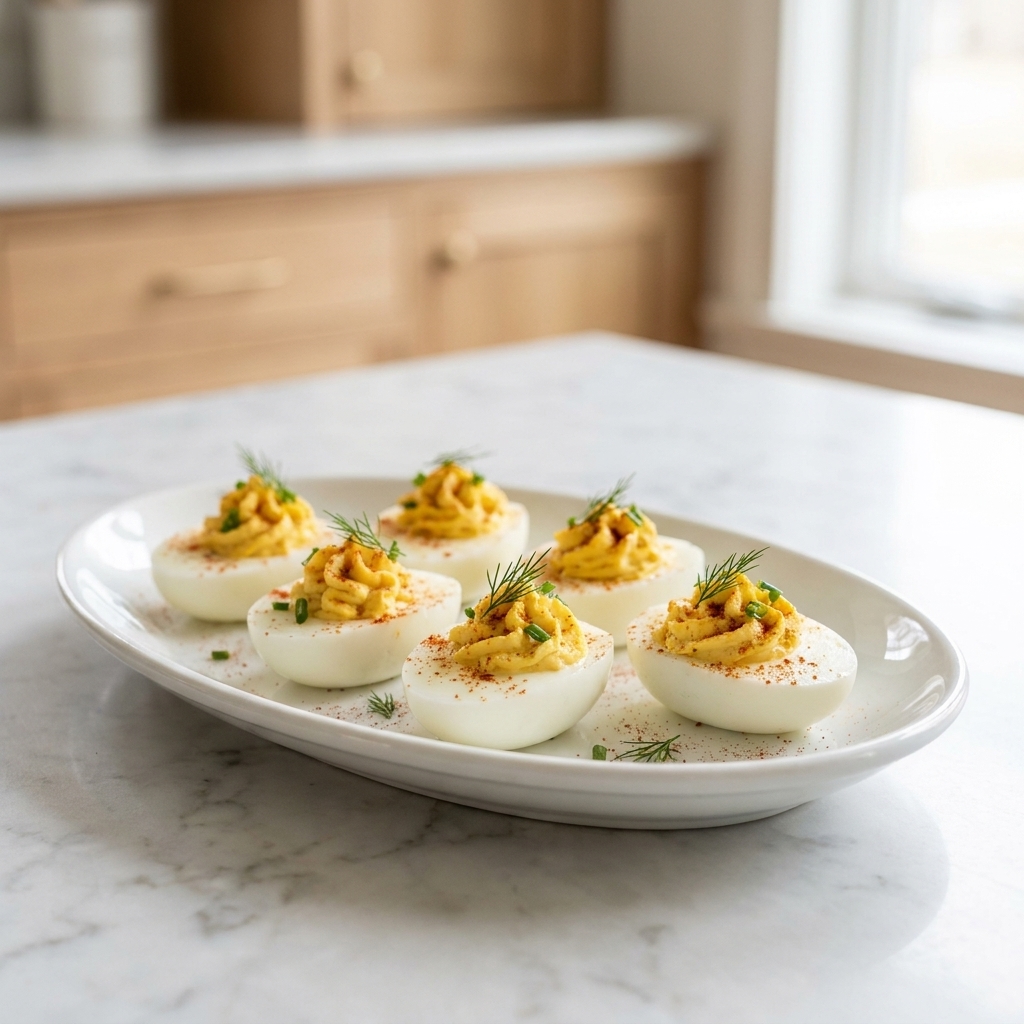
The quick answer
- Hard-boil and peel eggs: I do this up to 2 days ahead for the best texture and appearance. (Hard-cooked eggs can often be kept refrigerated longer, but for deviled eggs I aim for the 48-hour sweet spot.)
- Make the filling: up to 2 days ahead, stored tightly sealed at 40°F / 4°C or colder.
- Fill the egg whites: ideally within 8 hours of serving (you can do 24 hours ahead if you have to, but expect slightly softer whites and less perky garnish).
- Garnish: right before serving (or within an hour).
If you want the freshest, cleanest deviled eggs, store the components separately and assemble the day of.
Make-ahead timeline
2 days before
- Boil the eggs. Cool completely.
- Peel the eggs. Pat dry.
- Slice and separate yolks from whites.
- Make the filling. Store it in a sealed container or piping bag.
- Store the whites. Keep them covered and chilled.
This is the sweet spot where you have done the real work but nothing has had time to get weird.
1 day before
- Check the filling for texture. If it thickened up overnight, stir in 1 to 2 teaspoons mayo or a tiny splash of pickle juice to loosen.
- Prep your serving setup. Platter space in the fridge, egg tray, garnishes washed and ready.
If you are building a full spread, this is also when I map out my appetizer lineup. Our hosting guides can help you think through the whole table: Party Food Guide and Appetizers Guide.
Day of
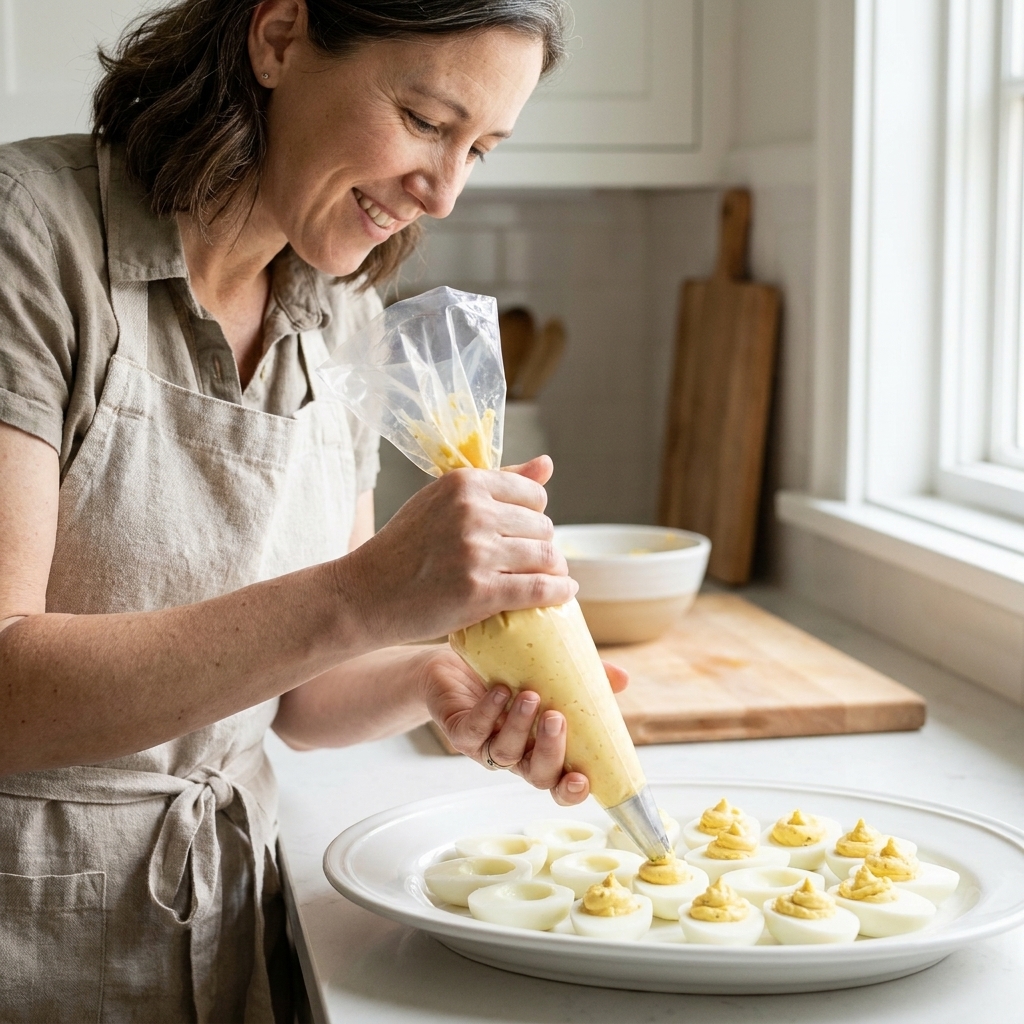
- 2 to 6 hours before guests arrive: Fill the egg whites and arrange on the platter. Cover loosely and refrigerate.
- Right before serving: Add garnish, do any final paprika dusting, and wipe any smudges on the platter edges.
How to store deviled eggs
Store components separately
Most make-ahead deviled egg problems come from moisture and condensation. Once egg whites are cut and chilling, you can get surface moisture over time, and the filling can loosen as it sits. Separating keeps everything fresher.
- Egg whites: Store in a single layer in an airtight container, lined with a paper towel. Add another paper towel on top before sealing. This helps catch condensation.
- Filling: Store in an airtight container with plastic wrap pressed directly on the surface, or pipe it into a zip-top bag and seal tightly.
If you must assemble early
Sometimes life happens and you just want them done. If you fill them the day before:
- Keep them very cold and tightly covered.
- Skip wet garnishes (like juicy salsa or watery relish) until serving.
- Expect the filling to settle a bit. You cannot really re-pipe once they are filled, so pipe them slightly taller than you want.
Containers and transport
Deviled eggs are basically tiny creamy boats. You want them stable, cold, and protected from fridge smells.
At home
- A deviled egg tray with a lid is the easiest.
- A rimmed plate inside a large lidded container works well if you do not have a tray.
- A parchment-lined baking sheet can hold a crowd, then slide into the fridge. Cover well.
For travel
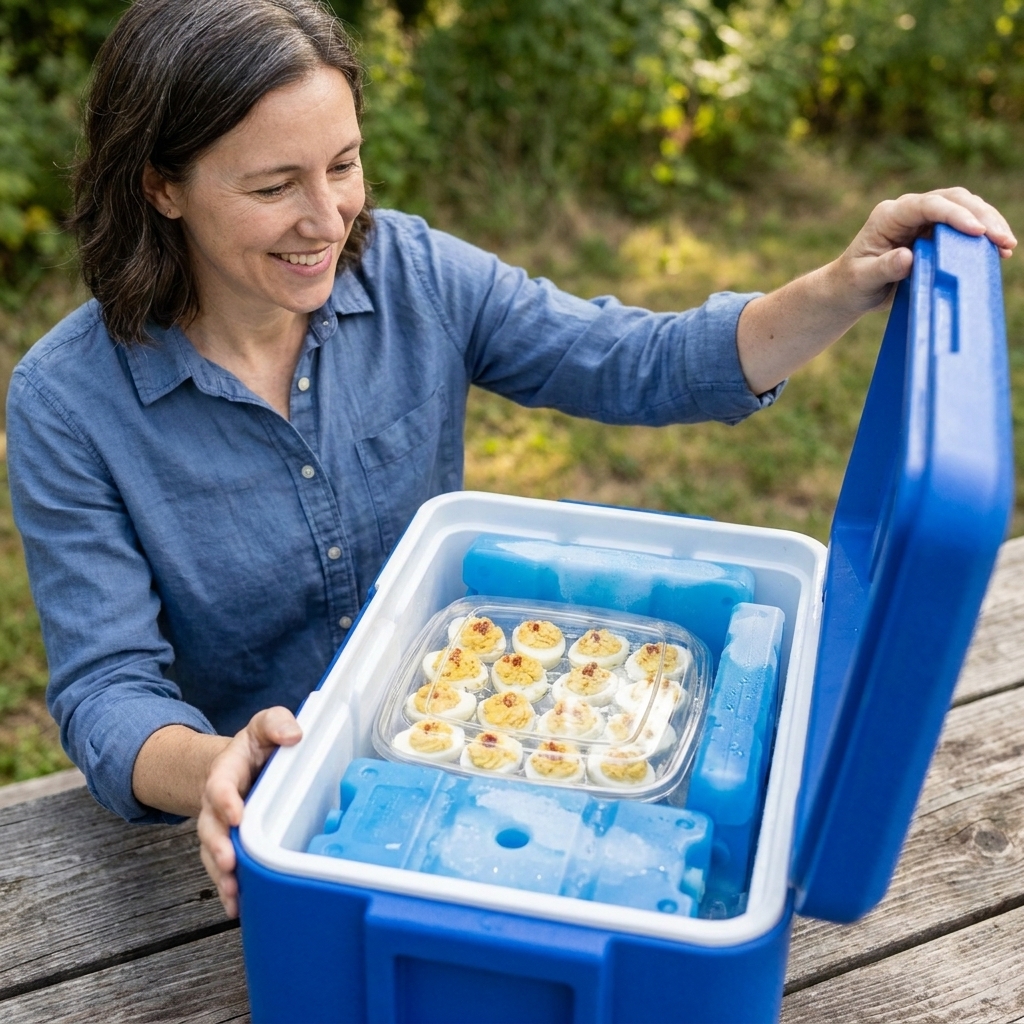
- Transport filled eggs in a lidded tray, packed in a cooler with ice packs.
- Or transport components separately and pipe on site if you can. It is not fancy, it is smart.
Keep the whites from tipping
- If a few whites wobble, slice a paper-thin sliver off the rounded bottom so they sit flat.
- No tray? Nestle them on a bed of greens, a folded paper towel, or a thin layer of kosher salt on the platter to help them stay put.
If you are planning a deviled egg spread specifically, I put all my cold-holding tricks in one place here: Plan a Chilled Deviled Egg Party Tray.
Food safety basics
Deviled eggs are perishable because they are protein plus mayo-based filling. Keep them cold and do not let them linger at room temperature.
- Chill promptly after boiling and after filling.
- Serve cold and return to the fridge as needed.
- Do not leave out longer than 2 hours total at room temperature. If it is very warm (outdoor summer party), I follow the more cautious 1 hour rule.
If you want the official refrigerator and leftovers guidance, the USDA has a clear cold food safety overview here: https://www.fsis.usda.gov/food-safety/safe-food-handling-and-preparation/food-safety-basics/keep-food-safe-food-safety.
My make-ahead method
1) Boil and cool well
Overcooked eggs make dry, crumbly yolks, and that makes you add extra mayo to compensate. Aim for firm whites and tender yolks. Once cooked, cool the eggs quickly so peeling is easier and the whites stay smooth. Bonus: that quick cooling also helps prevent the green-gray ring around the yolk that can show up with overcooking.
2) Dry the whites
After peeling, I pat eggs dry. Before assembling, I also blot the cut side of each egg white with a paper towel. This tiny step keeps the filling from sliding and helps prevent watery puddles later.
3) Make the filling, then taste again tomorrow
Flavors settle overnight. The next day, I taste and adjust salt, acid (lemon juice or pickle juice), and a pinch of sugar if the filling feels sharp. If it got too thick, I loosen it with a little mayo, not extra mustard.
4) Pipe for neatness
I am not precious about gadgets, but piping makes deviled eggs look party-ready fast. A zip-top bag with the corner snipped works perfectly.
5) Garnish at the last minute
Paprika is easy and forgiving. Fresh herbs are beautiful but can wilt if they sit too long. Crispy bacon loses its crunch. Save your garnish for right before serving so the top looks fresh and intentional.
Troubleshooting
Why is my filling watery?
- Too much mayo or a very juicy add-in (relish, hot sauce, pickles).
- Condensation from storing filling before it is fully chilled.
- Surface moisture from the whites once they are cut and stored, especially if assembled early.
Fix: Stir the filling well, then thicken with a little extra mashed yolk (if you held some back) or a spoonful of Greek yogurt (if that fits your recipe). Or simply chill longer. For next time, store components separately and blot the whites.
Why do my egg whites feel rubbery?
Usually overcooking, or eggs sitting too long after being filled and exposed to cold, circulating fridge air.
Fix: Cover tightly and avoid making fully assembled eggs multiple days ahead.
Why do they smell like the fridge?
Eggs are little odor sponges.
Fix: Use airtight containers, and keep them away from strong-smelling foods like cut onions and garlicky leftovers.
FAQ
Can I make deviled eggs 3 days ahead?
You can boil the eggs 3 days ahead and keep them refrigerated, but I would not fully assemble them that early if you can avoid it. For best texture and flavor, aim to make the filling and prep whites no more than 2 days ahead, then fill them the day of.
Is it better to store hard-boiled eggs peeled or unpeeled?
For make-ahead deviled eggs, I like peeled because it saves time and stress later, and you can check for any nicks before party day. Just store them airtight with a paper towel to manage moisture.
Can I freeze deviled eggs?
I do not recommend freezing fully assembled deviled eggs. The whites turn spongy and the filling can separate. If you are trying to get ahead for a big holiday, make them 1 to 2 days ahead instead and focus on other freezer-friendly appetizers.
How do I keep deviled eggs cold on a buffet?
Use a chilled tray setup and serve in smaller batches. Keep the backup tray in the fridge and swap as needed. If you are building a dedicated egg display, start with my chilled deviled egg tray plan.
My simplest takeaway
If you want deviled eggs that taste like you made them five minutes ago, do this: prep everything up to 48 hours ahead, then fill them the day of. It is the best balance of low stress and high payoff, which is basically my whole hosting philosophy in one sentence.
If you want more deviled egg basics and flavor ideas, you can browse our main guide here: Deviled Eggs Guide.