

If you have ever hosted a party where the deviled eggs were the first thing to disappear, you already know the truth: nobody is thinking about the main course when there is a platter of perfectly smooth, creamy, two-bite eggs on the table.
And yet, deviled eggs have one sneaky stress point that can ruin your mood fast: peeling. I have had batches that slid out of their shells like a dream, and batches where I stood at the sink muttering like a cartoon villain while I tore up half the whites.
So this is my no-drama guide to boiling and peeling eggs for flawless deviled eggs, with three methods I actually use: traditional boiling, steaming, and the Instant Pot. I will tell you when each method wins, exactly how long to cook, and the small steps that make peeling almost boring (the highest compliment).
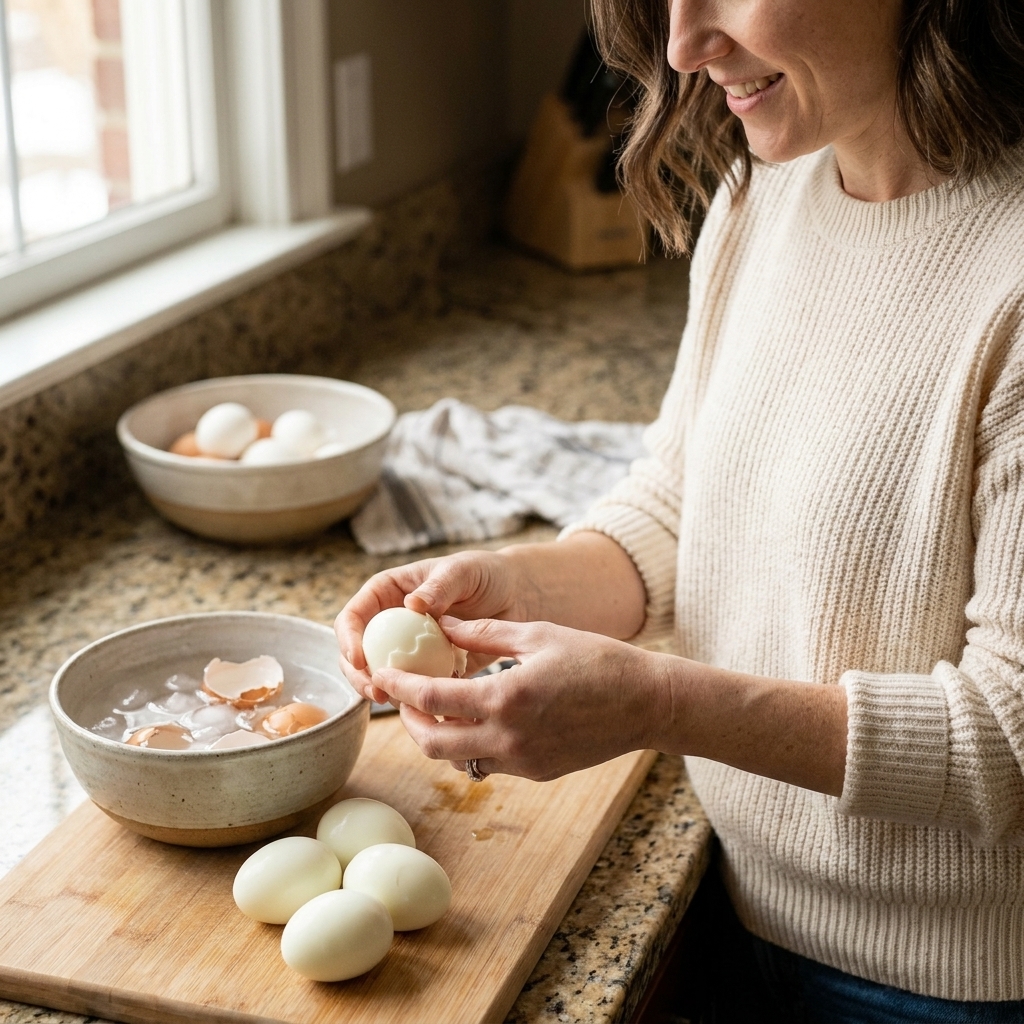
What makes an egg easy to peel
Before we pick a method, it helps to know what we are aiming for. Easy peeling is mostly about two things:
- Fast, even heat at the start. Methods like steaming and pressure cooking tend to make shells release more cleanly for a lot of people.
- A fast chill after cooking. Cooling firms the whites, stops carryover cooking, and usually makes the membrane less clingy.
There is also the classic advice about using older eggs. In my experience, slightly older eggs can be easier, but you do not need to delay your party plans if the store only had very fresh ones. The method and the chill matter more.
One more quick note: if you are cooking at higher altitude, you may need an extra minute or two to get a fully set yolk. Keep your first batch as a “test egg,” then adjust.
My top pick: steaming
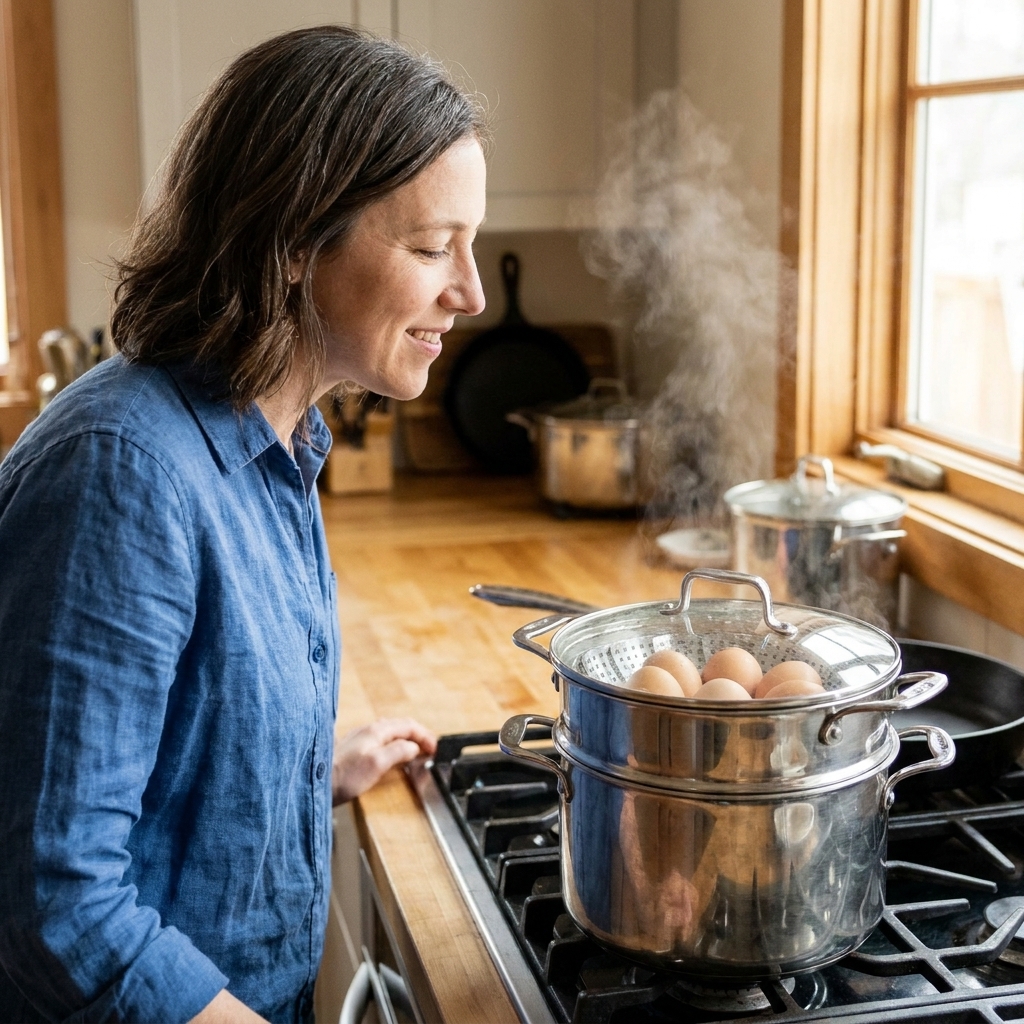
If your main goal is easy peeling with smooth whites, steaming is the method I recommend most often. It is consistent, it heats fast, and it is gentle enough to keep the whites tender.
How to steam eggs
- Add about 1 inch of water to a pot and bring it to a steady simmer.
- Place eggs in a steamer basket, then set the basket over the simmering water.
- Cover with a tight lid.
- Steam for the timing you want (see below).
- Transfer immediately to an ice bath for at least 10 minutes.
Steaming time for deviled eggs
For classic deviled eggs, you want a fully set yolk that is not chalky.
- Large eggs: 12 to 13 minutes
- Extra-large eggs: 13 to 14 minutes
Tessa tip: If you are making a fancy tray and want super neat halves, steam toward the longer end so the yolk sets firmly for cleaner slicing.
Classic boiling
Traditional boiling works great when you do it with a little intention. The biggest mistake I see is leaving eggs at a rolling boil for too long. That is how you get rubbery whites and that gray-green ring around the yolk.
How I boil eggs for deviled eggs
- Place eggs in a single layer in a pot.
- Add cold water until the eggs are covered by about 1 inch.
- Bring to a full boil over medium-high heat.
- As soon as it reaches a boil, cover the pot and turn off the heat.
- Start timing now, and let the eggs sit covered.
- Move eggs to an ice bath for at least 10 minutes.
Boiling time (covered, off-heat)
- Large eggs: 11 to 12 minutes
- Extra-large eggs: 12 to 13 minutes
When boiling is the best choice: When you are cooking a big batch in a wide pot and want a familiar, no-special-equipment method.
Instant Pot eggs
The Instant Pot can produce very peel-friendly eggs, especially if you like a set-it-and-forget-it workflow while you prep fillings, chop herbs, or set out platters. The pressure environment tends to help shells release cleanly.
Instant Pot hard-cooked eggs
- Pour 1 cup water into the Instant Pot insert.
- Set a trivet or steamer rack inside (you want the eggs above the water, not sitting in it).
- Add eggs. One layer is easiest, but stacking on the trivet is usually fine.
- Cook on High Pressure for 5 minutes.
- Let it natural release for 5 minutes, then do a quick release.
- Transfer to an ice bath for at least 10 minutes.
Small timing note: Cookers vary. If you want firmer yolks, try 6 minutes. If you are using smaller eggs, 4 to 5 minutes is often plenty.
When Instant Pot is the best choice: When you want consistent results without watching the stove, or when you are doing multiple batches for a party.
The ice bath
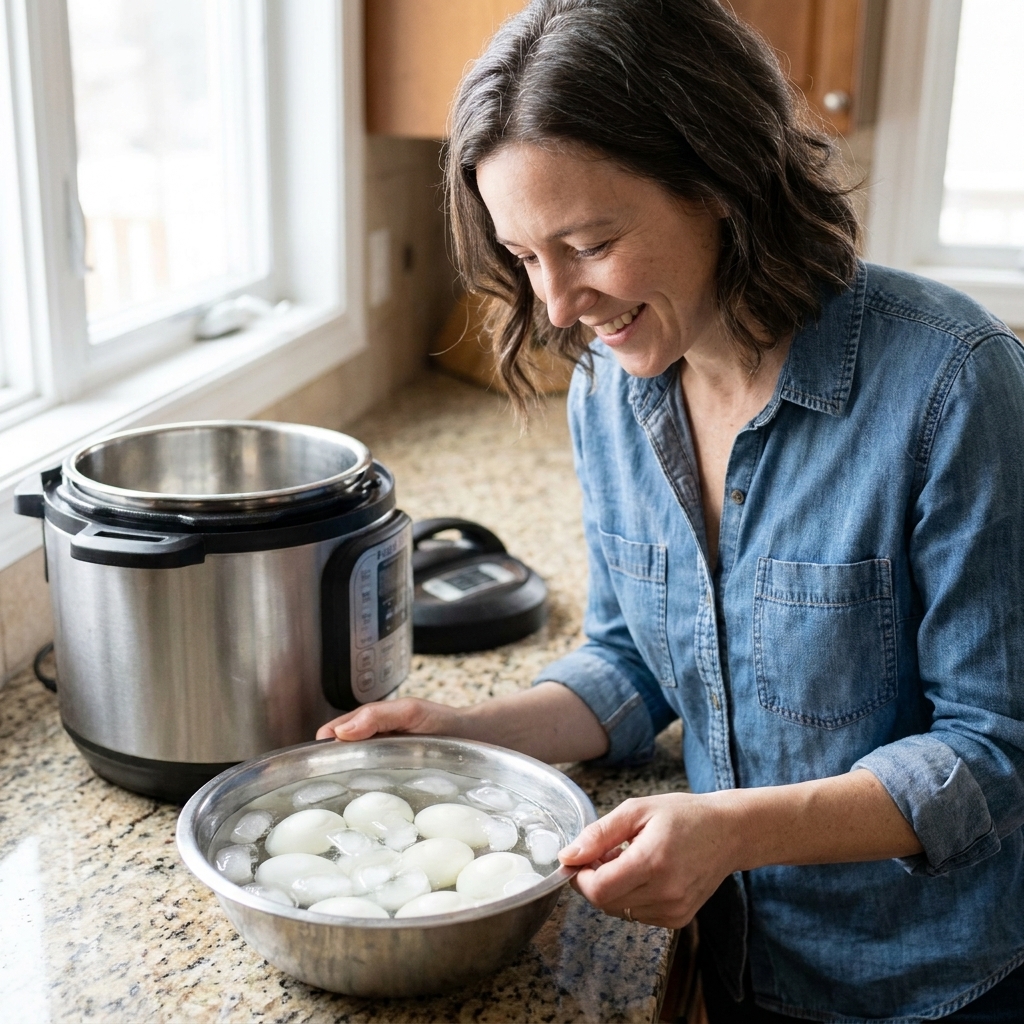
I used to treat the ice bath like an optional flourish. It is not. It is the simplest way to improve peeling across every method.
How to do it
- Fill a large bowl with ice and cold water.
- As soon as eggs are cooked, move them straight into the bath.
- Cool for at least 10 minutes, longer is fine.
Why it helps: The rapid chill firms the whites, reduces carryover cooking, and makes the membrane less clingy.
How to peel eggs cleanly
Peeling is where deviled eggs go from “cute little appetizer” to “why did I volunteer to host.” Here is the approach that keeps me calm.
My peeling method
- Tap the egg gently all over on the counter to crack the shell evenly.
- Start peeling from the wider end where the air pocket usually is.
- Peel under a thin stream of cool running water, or peel with the egg submerged in a bowl of water.
- If you hit a stubborn spot, slide a spoon under the membrane and use it to lift the shell away.
Tessa tip: If you are making deviled eggs for guests, peel carefully but do not over-handle. The more you squeeze the egg, the more you dent the whites.
Quick comparison
| Method | Best for | Peelability | Batch size |
|---|---|---|---|
| Steaming | Smooth whites, consistent results | Excellent | Medium to large |
| Traditional boiling | No special equipment, familiar routine | Good to very good | Large with wide pot |
| Instant Pot | Hands-off, repeatable timing | Excellent | Small to large (multiple batches) |
Troubleshooting
Shell sticks in tiny bits
- Cool longer in the ice bath.
- Try steaming or Instant Pot next time for that faster, more even heat.
- Crack more thoroughly before peeling. One big crack is harder than lots of small cracks.
Gray-green ring on the yolk
- Usually overcooking or slow cooling. Shorten the time slightly and ice-bath immediately.
Whites are rubbery
- Too much time at high heat. For boiling, use the covered off-heat method instead of a sustained boil.
Yolks are slightly underdone
- Add 1 minute to your cook time.
- For consistency, start your eggs all the same temperature (all fridge-cold or all room temp) so your timing stays predictable.
Eggs crack while cooking
- Do not crowd the pot.
- For boiling, starting in cold water can reduce temperature shock.
- For steaming, lower the eggs into the basket gently once the water is already simmering.
Make-ahead tips
I am the queen of make-ahead prep, and eggs are a perfect place to start.
- Cook the eggs 1 to 3 days ahead. Keep them unpeeled in the refrigerator if you want to maximize freshness.
- Peel the day before if you prefer. Store peeled eggs in an airtight container with a barely damp paper towel to prevent drying.
- Slice and separate right before filling. This keeps the whites pristine and less likely to pick up fridge odors.
Food safety, party edition: Keep eggs refrigerated until you are ready to serve, and do not leave deviled eggs sitting out longer than 2 hours (or 1 hour if it is very warm out).
If you want the full party workflow, I keep my hosting approach over in Party Food, and for all the classic filling basics and fun variations, head to Deviled Eggs.
My bottom line
If you want the smoothest, easiest-to-peel eggs for deviled eggs, start with steaming and commit to a real ice bath. Traditional boiling is still wonderful when you use the covered off-heat method, and the Instant Pot is a great option when you are juggling a million hosting tasks.
Whichever route you choose, remember: the goal is not perfection in the kitchen. The goal is a platter of deviled eggs that makes people hover by the island, refill their drink, and stay a little longer.