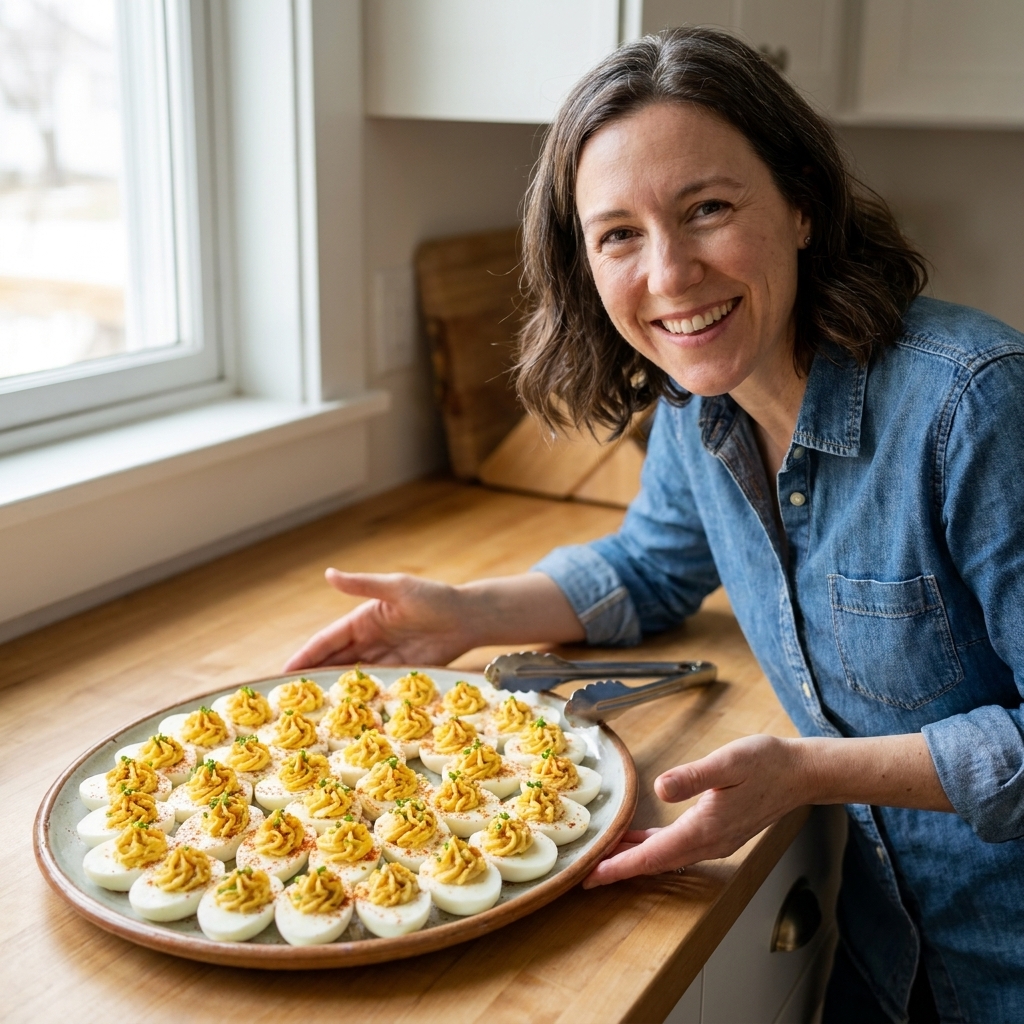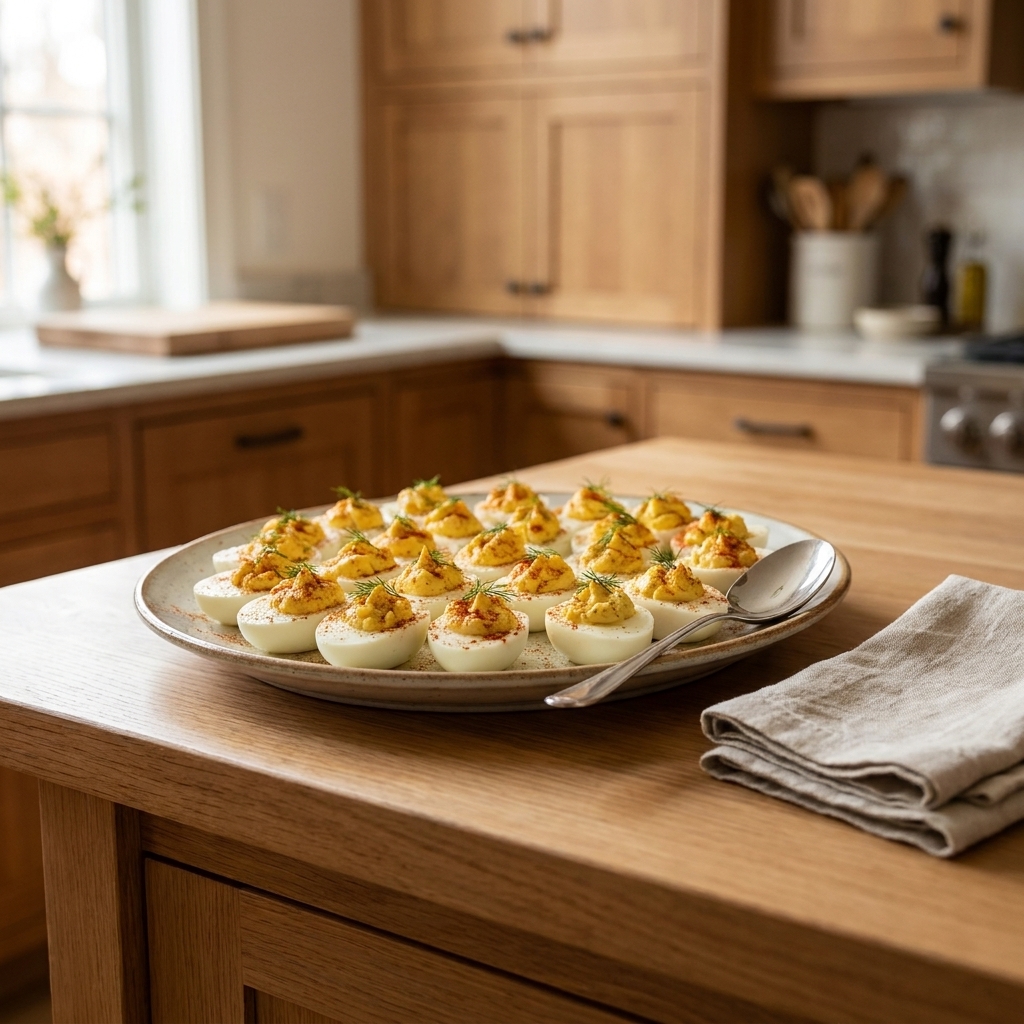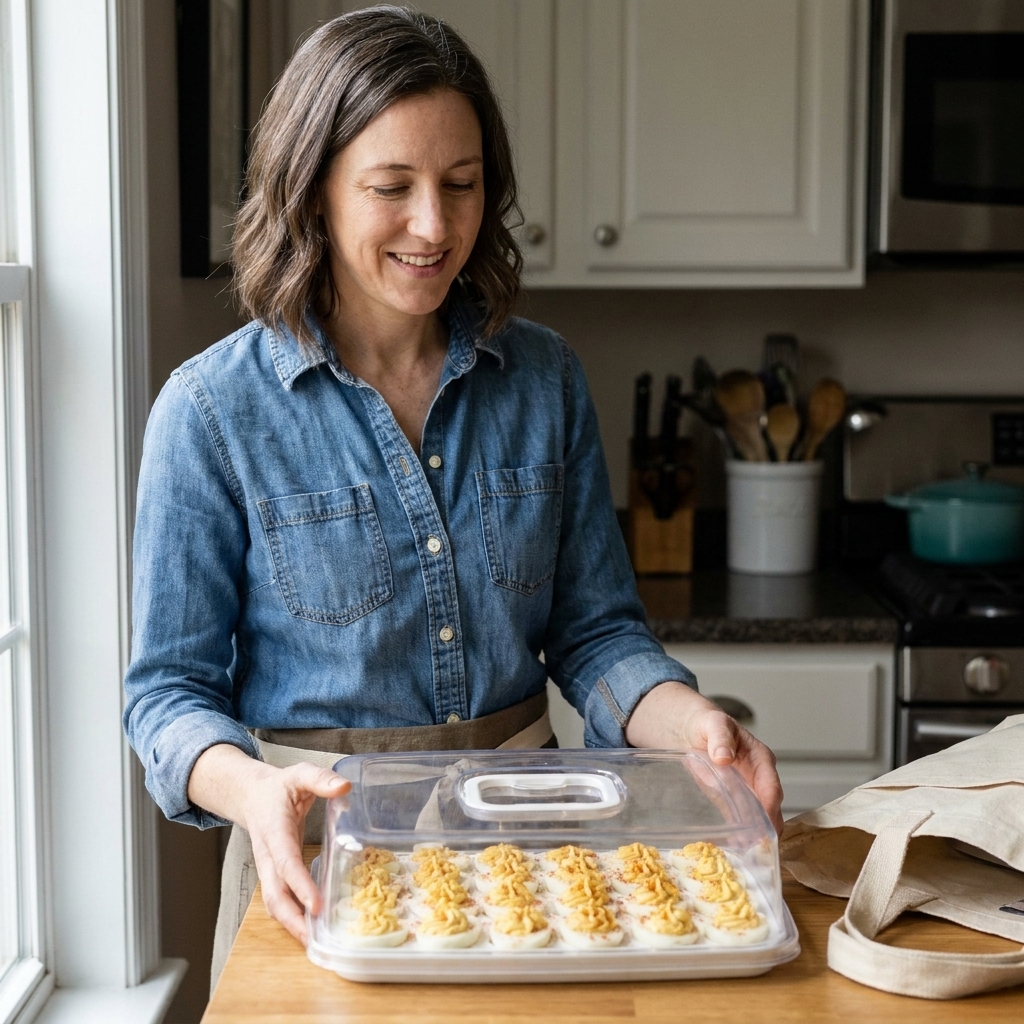

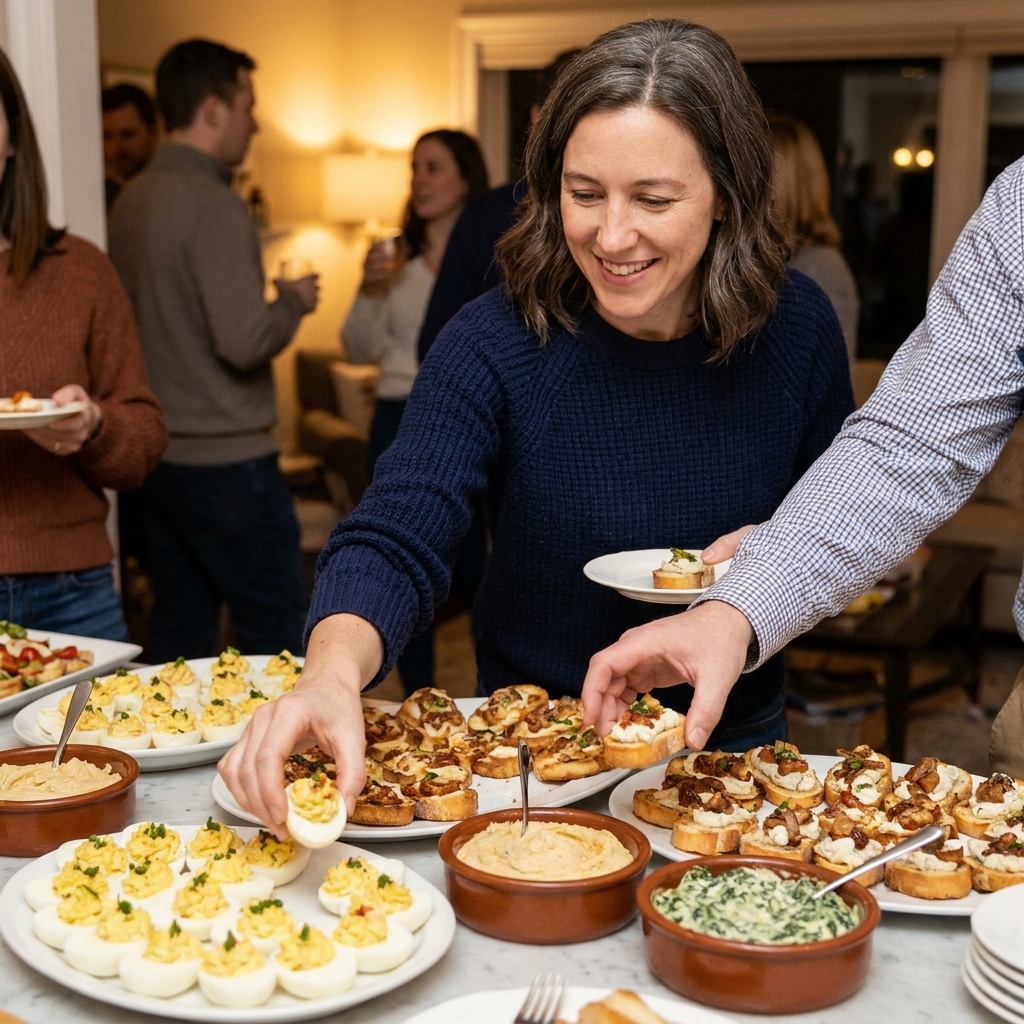
In my family, the appetizer spread was not a warm-up act. It was the main event. People parked themselves at the kitchen island, talked with their hands, and somehow managed to eat seven different things before anyone even mentioned dinner.
Which is exactly why I am obsessed with appetizer math. Not because I love spreadsheets (I do), but because nothing makes hosting feel more chaotic than realizing you are short on food right as everyone arrives. Let’s plan the right amount of small bites so you can relax and actually enjoy your own party.
First, what counts as a “piece”?
When I say “piece,” I mean one pick-up-and-eat bite. Think: one deviled egg half, one crostini, one stuffed mushroom, one meatball, one small skewer. (I get more specific later, but that definition keeps the math simple.)
The quick answer (then we fine-tune)
If you just want a solid rule of thumb, here is my go-to range for total appetizer pieces per guest. These ranges assume a mix of mostly standard bites with a few lighter snacks and a few heartier items.
- Light nibbles (1 hour, not a meal): 4 to 6 pieces per guest
- Cocktail-style (2 hours, not a meal): 8 to 10 pieces per guest
- “Apps are dinner” (2.5 to 3 hours): 12 to 16 pieces per guest
- Long party (3 to 4 hours, no seated meal): 16 to 20 pieces per guest
Now, let’s make that number feel tailored to your event, your guests, and the kind of food you are serving.
The simple formula I use every time
Here is the planning shortcut that works for almost any party:
Total pieces needed = Guests × Bites per guest × Party length factor
To keep it practical, I treat “bites per guest” as a baseline for a 2-hour party, then adjust with a factor. The quick ranges above are basically this formula, just pre-baked for common party lengths.
Step 1: Pick your baseline bites per guest (for a 2-hour party)
- 6 per guest if there is a full meal coming soon
- 8 per guest for a normal cocktail party
- 10 per guest if appetizers are the main food
Step 2: Apply a party length factor
- 1 hour: × 0.6
- 2 hours: × 1.0
- 3 hours: × 1.5
- 4 hours: × 2.0
Step 3: Add a small buffer
I add 10 percent for most gatherings. If it is teenagers, big appetites, game day, or alcohol-forward, I bump it to 15 percent.
The 3 questions that change the math
1) Is there a real meal, or are appetizers the meal?
This is the biggest lever. If dinner is served within 60 to 90 minutes, guests snack politely. If there is no meal, they snack with purpose.
- Meal later: plan about 4 to 8 pieces per guest over 2 hours
- Apps only: plan about 10 to 16 pieces per guest over 2 to 3 hours
2) What time is it?
A 3 pm baby shower is a different appetite than a 7 pm gathering where people skipped dinner because they assumed you had it handled. I treat these as gentle nudges, not hard science.
- Between meals (2 to 5 pm): consider trimming roughly 10 percent
- Dinner hours (5:30 to 8 pm): consider adding roughly 10 to 20 percent if there is no meal
- Late night (after 9 pm): fewer total pieces can work, but include something hearty and salty
3) Are you serving alcohol?
Alcohol does two things: it makes people snack more, and it makes them snack longer. My personal rule of thumb is to plan for about a half to one extra hearty bite per person per hour if you are serving cocktails or wine, especially if the party runs into dinner hours. Then I make sure some of the spread is salty and filling.
If you want pairing ideas that also help you pace the food, see Wine and cocktail pairings for deviled eggs.
Guest factors worth planning for
This is the part hosts forget, and it is why identical piece counts can feel like “way too much” at one party and “gone in 20 minutes” at another.
- Kids: they often eat fewer total pieces, but they gravitate to familiar items. Keep at least one kid-friendly option that is easy to grab.
- Big eaters: if your crowd includes athletes, teens, or “we skipped lunch,” aim high and add that 15 percent buffer.
- Dietary restrictions: if several guests are vegetarian, gluten-free, or dairy-free, make sure they have multiple options. Otherwise they will either go hungry or demolish the one safe dish.
- Veg-heavy menus: if most bites are light (crudités, chips, fruit), plan more total pieces or add one truly filling anchor.
How many appetizers should you offer?
This is where hosts overcomplicate things. You do not need 14 different recipes. You need enough variety that people can graze, plus smart repeats so the table stays full.
- Up to 10 guests: 3 to 4 appetizers
- 10 to 25 guests: 5 to 7 appetizers
- 25 to 50 guests: 7 to 9 appetizers
- 50+ guests: 9 to 12 appetizers (with repeats of the easiest crowd-pleasers)
My favorite structure is:
- 1 to 2 anchor items: hearty, filling, always popular (deviled eggs live here)
- 2 to 3 lighter items: crunchy, fresh, bright flavors
- 1 warm item: even if the rest is chilled, one warm bite makes it feel like a real spread
- 1 sweet or fruit option: optional, but people love it late in the party
If you are building the whole menu around deviled eggs, I have a whole party-planning approach in Guide: Party Food and a fun way to design your spread in Build a charcuterie board around deviled eggs.
Piece counts that actually help
Not all appetizers “count” the same. A deviled egg half is more filling than one shrimp chip, and a slider is basically a meal. Here is how I mentally categorize bites when I am doing the math:
| Type of bite | Examples | How it counts |
|---|---|---|
| Light bite | Veg and dip, chips and salsa, olives, tiny skewers | Counts as about half to three-quarters of a standard bite |
| Standard bite | Deviled egg half, stuffed mushroom, small crostini | Counts as 1 standard bite |
| Hearty bite | Mini slider, thick meatball, loaded potato skin | Counts as about 1.5 to 2 standard bites |
When you plan, aim for a mix. If your whole menu is light bites, you need a higher total piece count to keep people satisfied.
Worked examples (steal these)
Example 1: 12 guests, 2-hour cocktail party, dinner later
- Baseline: 6 bites per guest
- Length factor (2 hours): × 1.0
- Total: 12 × 6 × 1.0 = 72 pieces
- Buffer 10%: about 80 pieces total
If deviled eggs are one of the anchors, I would happily make 24 deviled egg halves (12 whole eggs). That is 2 halves per person, which is the high end of my range, because people love them and they disappear fast.
Example 2: 25 guests, 3-hour “apps are dinner” holiday mixer
- Baseline: 10 bites per guest
- Length factor (3 hours): × 1.5
- Total: 25 × 10 × 1.5 = 375 pieces
- Buffer 15% (holiday + drinks): about 430 pieces total
That sounds like a lot until you spread it across 7 to 9 appetizers. If you want deviled eggs to be a hero here, I would plan them as roughly 15 to 25 percent of total pieces, depending on how many other hearty items you have.
Example 3: 50 guests, 4-hour open house, grazing all night
- Baseline: 8 to 10 bites per guest (depends on how meal-like your menu is)
- Length factor (4 hours): × 2.0
- Total: 50 × 8 × 2.0 = 800 pieces (or 1,000 pieces if you go with 10)
For open houses, I strongly recommend staging food in waves so you are not putting 1,000 pieces out at once. More on that below.
How to split the total
Once you have your total pieces, divide them so your table feels balanced and you are not stuck with 200 of the same thing.
My easy split
- 25 to 35% anchor items (filling, high-protein, satisfying)
- 35 to 45% standard bites (the fun variety)
- 20 to 30% light bites (crunchy, fresh, snacky)
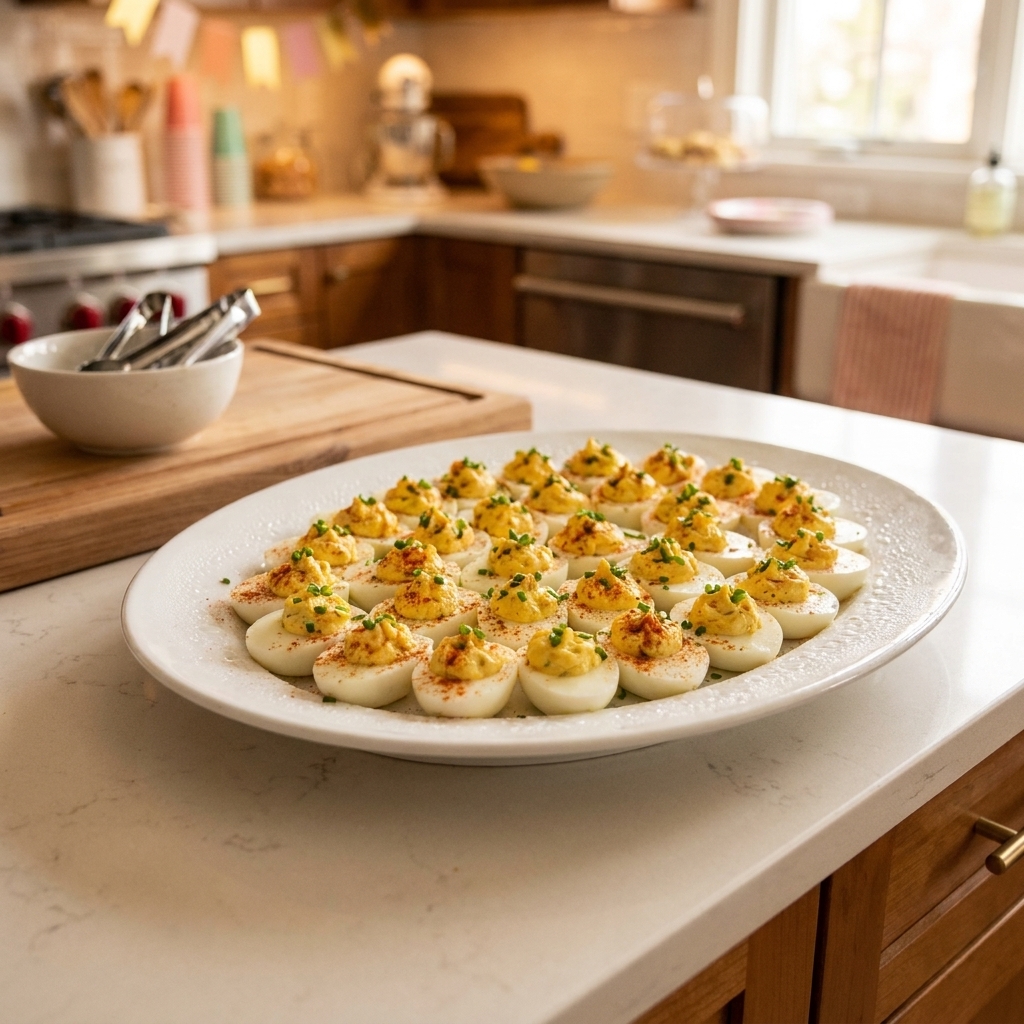
Deviled eggs usually land in the anchor or standard category, depending on how loaded they are. If you are doing something hearty like Buffalo chicken deviled eggs or smoked deviled eggs, I count them as anchor items.
Plan in waves
This is my secret to looking like I have my life together even when I am absolutely sprinting in the kitchen.
- Wave 1 (arrival): put out about 40% of your total pieces
- Wave 2 (1 hour in): refresh with about 30%
- Wave 3 (later): finish with the last 30%
Waves keep food looking fresh, protect cold items, and stop the table from getting demolished in the first 15 minutes.
If deviled eggs are part of your plan (always yes from me), you will love Plan a chilled deviled egg party tray and How to transport deviled eggs without ruining the presentation.
Deviled egg math
Deviled eggs are conveniently countable: 1 egg = 2 pieces (two halves). Here is how I plan them within an appetizer spread:
- As one of several appetizers: 1 to 2 halves per person
- As a featured anchor: 2 to 3 halves per person
- Deviled-egg-forward party table: 3 to 4 halves per person (especially if you offer multiple flavors)
If you are scaling for a bigger crowd, bookmark Scaling deviled eggs for a crowd (ratios for 50 guests). It is the difference between smooth hosting and that moment where you are scraping yolk filling out of a bowl with a spoon while guests hover nearby.
One safety note I never skip: keep cold appetizers cold. For the practical time limits and serving tips, read Deviled egg food safety: how long can they sit out?.
Quick planning table
| Party style | Length | Total pieces per guest |
|---|---|---|
| Pre-dinner nibbles | 1 to 2 hours | 4 to 8 |
| Cocktail party | 2 hours | 8 to 10 |
| Apps as dinner | 2.5 to 3 hours | 12 to 16 |
| Open house grazing | 3 to 4 hours | 16 to 20 |
Common questions
What if I am serving multiple appetizer courses?
Count everything as pieces. A passed bite is still a bite. If you have servers or friends walking trays around, you can usually plan on the higher end because distribution is faster.
What if my guest list is a mix of big eaters and light nibblers?
Plan for your crowd, not your hopes. If you have a group of hungry friends plus a handful of polite grazers, average it out and add a 10 to 15 percent buffer. Leftovers are fixable. Running out feels terrible.
How do I avoid ending up with tons of leftovers?
Use waves, include at least one appetizer you personally want to eat for lunch tomorrow, and choose a few components that store well. If deviled eggs are on the menu, you will appreciate How to repurpose leftover deviled eggs.
Do I need variety if I have enough total pieces?
Yes. People love options. Even swapping textures, crunchy, creamy, warm, chilled, makes the spread feel generous without increasing the total work. If you want garnish ideas that change the vibe fast, see 25 unique deviled egg garnishes (no paprika required).
My final rule
The point of appetizer math is not to turn your party into a math test. It is to buy you calm. Once you know the ballpark total pieces, you can make a smart menu, shop once, prep ahead, and actually enjoy the part that matters: people you like, gathered in your home, lingering around the kitchen island like it is the best seat in the house.
If you want more party-building help from the appetizer-obsessed corner of the internet, start with Guide: Appetizers and Guide: Deviled Eggs.