

In my family, deviled eggs were never the quiet little side dish. They were the centerpiece of the appetizer table, and yes, people absolutely judged the swirl. I learned the hard way that you can make the world’s tastiest filling, but if you spoon it in like you’re racing the clock, it just does not give “holiday spread” energy.
The good news: piping deviled eggs is one of those party tricks that looks fancy and feels intimidating, but it is mostly a few small habits. Once you get the bag loaded neatly and pick a tip that suits your filling, you will be turning out tidy, caterer-style swirls in minutes.
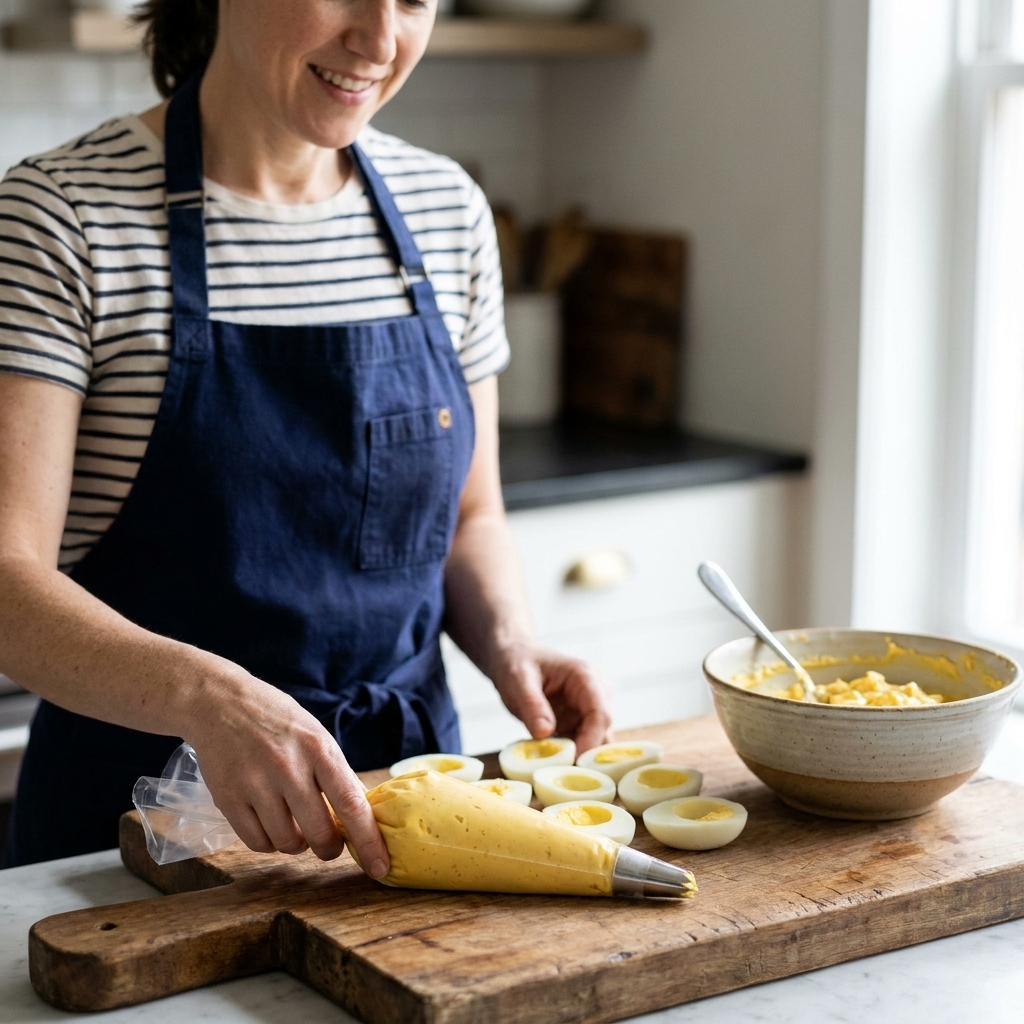
Start with the right egg base
Before we even talk tips and bags, your egg whites need to be sturdy enough to hold a swirl without wobbling, and your filling needs to be smooth enough to flow.
- Hard-boil and peel cleanly. If you struggle with tearing whites, start with my step-by-step method here: How to Boil and Peel Eggs for Deviled Eggs.
- Slice with intention. Use a sharp knife and wipe the blade between cuts for the cleanest edges. A damp paper towel swipe every few cuts makes a bigger difference than you would think.
- Stabilize your halves. If a few egg whites rock on the platter, shave a paper-thin slice off the rounded bottom so they sit flat.
Pick a piping tip that works
Not every “pretty cupcake tip” is a good deviled egg tip. You want something that makes a defined swirl but also lets thicker filling pass through without clogging.
My go-to tips
- Large open star (like Wilton 1M). This is the iconic, ruffly spiral you see at catered parties. Best for smooth, well-emulsified fillings.
- Large closed star (like Wilton 2D). Similar vibe, slightly more structured ridges. Great when you want the swirl to look extra crisp on a platter.
- Large round tip (like 1A). Clean and modern, and it is the most forgiving if your filling is a touch textured. You can do a simple mound or a soft spiral.
For a fancy look
- French star tip. Lots of fine ridges. Looks gorgeous, but it will punish you if the filling has any lumps.
- Petal tip. More advanced, but you can create a ruffled ribbon look if you like a dramatic egg.
My practical rule: if your filling includes anything chunky (bacon bits, chopped pickles, minced jalapeño), skip the small-ridged tips and use a large star or round tip. Or pipe a base swirl and garnish with the chunky bits on top.
Get the filling pipeable
This is where most piping frustration comes from. People blame their piping tip, but it is usually the texture.
How to make filling smooth
- Use a fine mash. A fork can work, but for really silky results, press yolks through a fine-mesh sieve or use a hand mixer.
- Mix until glossy. When the filling looks cohesive and slightly shiny, it usually pipes well.
- Check thickness. It should hold a soft peak. If you scoop it with a spoon and it slumps like pudding, it will not keep a tall swirl.
Temperature matters, too: pipe when the filling is cool but not ice-stiff. Too warm and your swirl slumps. Too cold and you will feel like you are arm-wrestling the bag.
If your filling is too loose, I have a full rescue guide: How to Fix Runny Deviled Egg Filling.
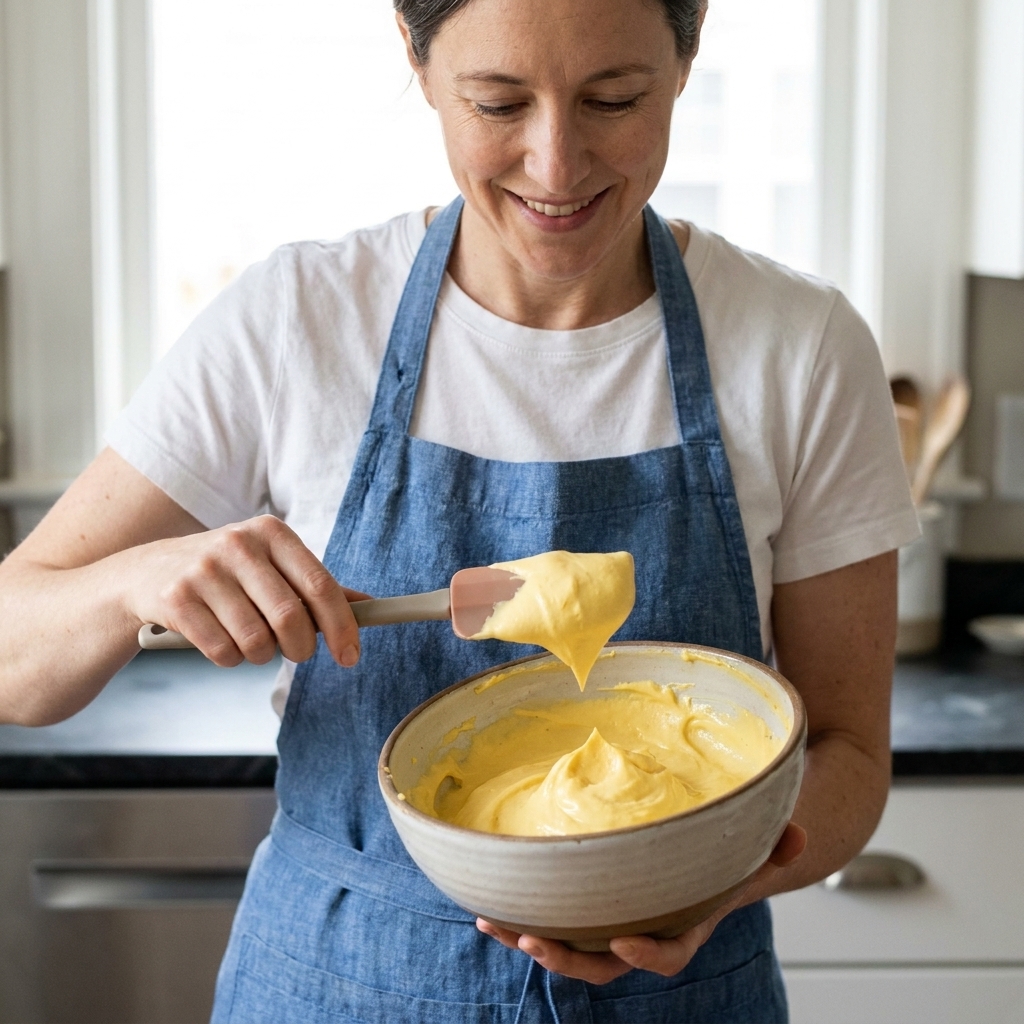
Choose a bag setup
You can pipe deviled eggs with a zip-top bag in a pinch, but a real piping bag feels steadier and looks cleaner fast.
Your options
- Disposable piping bags. My favorite for parties because cleanup is basically instant.
- Reusable piping bags. Great grip, but you will want to wash promptly so the oil in the filling does not cling.
- Zip-top bag hack. Fill, press out air, snip a corner, and pipe. It works best with a round “mound” style, unless you also drop a piping tip into the corner first.
Coupler or not
If you might switch tips midstream, use a coupler. If you are committed to one tip, you can skip it and just fit the tip directly into the bag.
Load the bag neatly
This is my “organized host” moment. A neat bag is the difference between confident piping and a slippery mess at the kitchen island.
- Fit the tip first. Drop the tip into the bag and push it down. Snip just the very end of the bag so about half the tip opening is exposed. Snip a little, test-fit, then snip more if needed. Most bag blowouts happen because the cut was too big.
- Cuff the bag. Fold the top 2 to 3 inches of the bag outward like a collar. This keeps the edge clean.
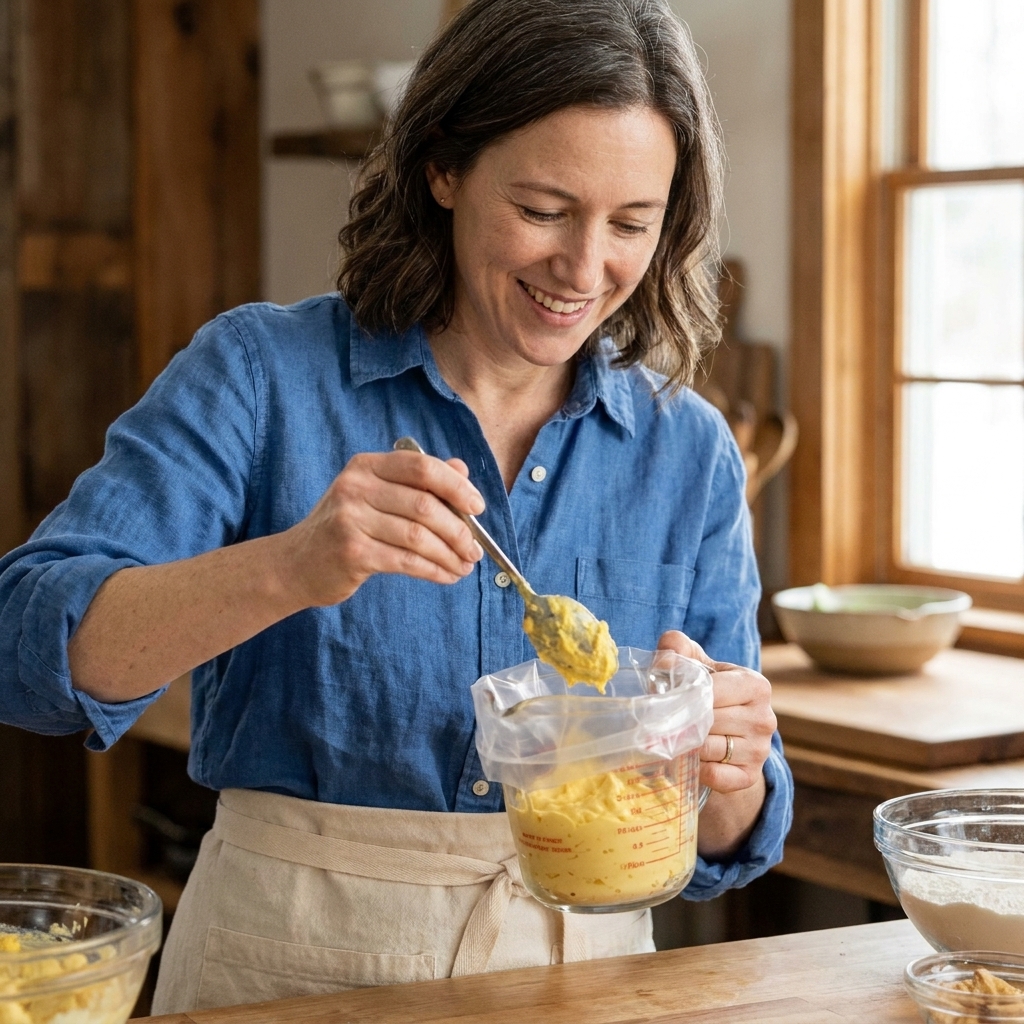
- Use a tall cup. Set the bag in a large measuring cup or drinking glass and fold the cuff over the rim. It holds the bag open so you can fill neatly.
- Spoon filling in. Add filling until the bag is about half to two-thirds full. Overfilling is the fastest way to lose control.
- Uncuff and twist. Unfold the cuff, then twist the bag above the filling tightly to create pressure. This twist is your “valve.”
- Push out air. Gently squeeze until filling is right at the tip and the air pockets are gone.
Pipe a clean swirl
Here is the motion caterers use, and it is surprisingly simple once you do three or four eggs.
Classic rosette swirl
- Hold the bag straight up. Aim for a 90-degree angle above the center of the egg white.
- Start with a base. Squeeze to anchor a small mound in the middle.
- Make one tight circle. Keeping steady pressure, pipe one rotation around that center mound to build height and create the swirl.
- Finish clean. Stop squeezing first, then lift straight up. This prevents that little “tail.”
Quick confidence tip: if you are nervous, pipe your first squeeze onto a plate, then start on the eggs once the flow feels steady.
Tall swirl
Same idea, but do two tight rotations instead of one so the swirl stacks upward. This works best with thicker filling and a large star tip.
Clean mound
With a round tip, pipe a single mound. Then do a tiny flick of the wrist at the end to smooth the top. It is minimal and elegant, and no one has ever complained about a mound when the filling tastes amazing.

Common problems and fixes
The tip clogs
- Switch to a larger tip (large star or round).
- Make the filling smoother by mixing longer or pressing yolks through a sieve.
- Save chunky add-ins for garnish instead of mixing them in.
The swirl looks messy
- Slow down and keep the bag vertical.
- Use steadier pressure. The “pretty” comes from consistent squeezing.
- Make sure your egg halves are stable and not rocking.
I get a pointy tail
- Stop squeezing before lifting the bag away.
- Finish with a tiny micro-circle as you stop pressure, then lift.
The filling is too soft
- Chill the filling for 20 to 30 minutes, then pipe.
- Fix the texture using my guide: How to Fix Runny Deviled Egg Filling.
The filling is too stiff
- Let it sit at room temperature for 10 minutes.
- Add a teaspoon at a time of mayo, Greek yogurt, or a little pickle brine until it flows.
- Warm hands can soften the bag quickly, so if the filling is buttery-stiff, piping actually helps once it starts moving.
Make-ahead tips
I love make-ahead hosting, but deviled eggs are happiest when you plan the timing.
- Make filling ahead: Yes. Store it in an airtight container and keep it refrigerated. For best texture, I like to make it up to 1 day ahead.
- Pipe ahead: Also yes, but I like to pipe within a few hours of serving so the swirl stays crisp. Keep them chilled.
- Transporting: Chill piped eggs until firm, then move them in a single layer. If you are building a full spread, my platter planning guide helps a ton: Plan a Chilled Deviled Egg Party Tray.
Finishing touches
Once the swirl is piped, you are basically 30 seconds away from “professional.” A small garnish adds contrast and hides any tiny imperfections.
- Paprika or smoked paprika: Classic for a reason.
- Chives or dill: One snip of green makes everything look intentional.
- Lemon zest: Bright, fresh, and pretty.
- Everything bagel seasoning: Crunchy and bold.
- A single caper or a thin pickle slice: Especially good on tangy fillings.
If you need inspiration beyond the basics, I keep a running collection in our main hub: Deviled Eggs Guide.
Quick FAQ
Do I need piping tips?
No, but they give you that defined ridge and height. If you are skipping tips, use a zip-top bag to pipe a mound and garnish generously.
How full should the bag be?
Half to two-thirds full. A bag that is too full gets warm in your hands, squirts unpredictably, and is harder to twist tight.
Why do deviled eggs weep?
Usually it is some combination of condensation and moisture separation. Warm eggs going into a cold fridge can create beads of water on the whites, and fillings can loosen if they include watery add-ins (like relish or pickles that were not well-drained) or if salt pulls moisture out over time. Chill your components before assembling, drain wet mix-ins well, and make sure the filling is thick enough to hold a swirl.
Can I make no-mayo filling and still pipe?
Absolutely, as long as it is smooth and thick enough. Here are options and ratios to keep it creamy: No Mayo Deviled Eggs.