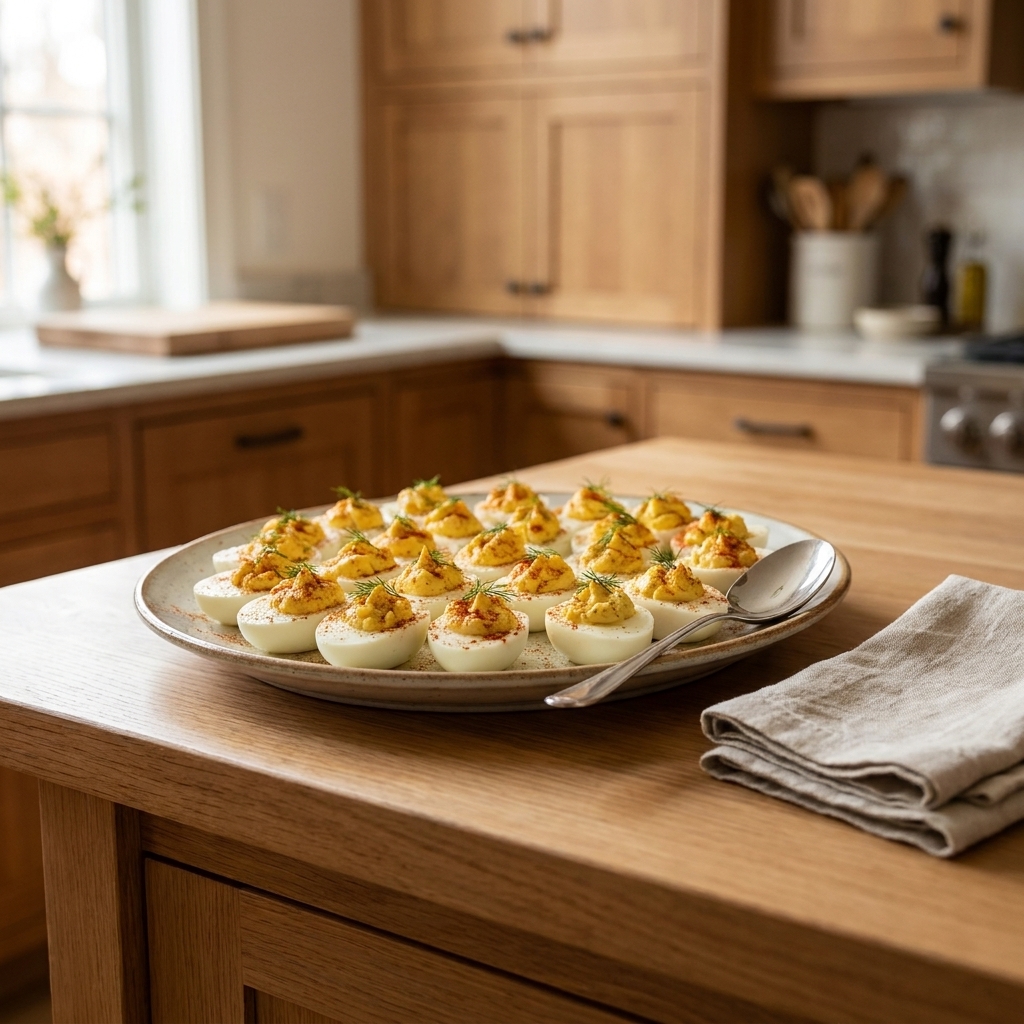

If you have ever tried to set out deviled eggs on a dinner plate and watched them slowly scoot toward the edge like they are making a run for it, welcome. I have hosted enough holiday mixers to know that display gear is not just "nice to have." It is the difference between a relaxed, graze-all-night spread and you doing tiny rescue missions all evening.
Below are my favorite tiered stands and appetizer trays for small bites, plus the styling tricks that make even a very average Tuesday night get-together look intentional.

How I choose serving pieces
Before we get into materials and shapes, here is my practical checklist. If a stand or tray fails one of these, it is out.
- Footprint versus capacity: I want height or compartments, not a giant platter that steals the whole counter.
- Stability: If it wobbles when you press lightly on the edge, it will wobble when someone reaches across it with a drink in hand.
- Grab-ability: Guests should be able to take a bite without pinching someone else’s garnish.
- Chill friendly: For deviled eggs, I prefer surfaces that feel cool and can sit over a shallow ice pan, like ceramic or metal. I also avoid anything that sweats and turns the table into a slip-and-slide.
- Cleanup reality: If it is hand-wash only with five parts and tiny screws, I will not reach for it often.
If you are planning a deviled-egg-heavy spread, I also like to build the menu around a "cold zone" and a "room temp zone." My guide on planning a chilled deviled egg party tray walks through that setup in a way that feels easy, not fussy.
Best tiered stands
Tiered stands are my number one space-saver. They lift food up into the line of sight, they make the table look fuller, and they free up precious horizontal real estate for drinks and napkins.
1) Two-tier stand
Best for: deviled eggs up top, sturdier bites below (meatballs, mini sandwiches, cheese cubes, stuffed mushrooms).
Why it works: The two-tier format is tall enough to add drama, but not so tall that guests feel like they are playing Jenga with their appetizer.
My styling tip: Put the messiest item on the bottom tier. Anything saucy or crumbly belongs lower so it does not rain down on your pretty eggs.
2) Three-tier stand
Best for: small cookies, truffles, tea sandwiches, macarons, and very tidy savory bites.
Watch out for: Top tiers can be a reach. If your crowd includes kids or shorter guests, keep the top tier for lightweight items that will not topple the stand.
Deviled egg note: I do not love deviled eggs on the highest tier. They are soft, and a wobbly reach can undo all your piping efforts. If you want piped perfection, peek at how to pipe deviled eggs like a caterer.
3) Server tower stand
Best for: cocktail parties where guests circulate and the food needs to be visible from a distance.
Why it works: Look for a central pole with stacked plates. That single post is usually sturdier than spindly legs, and the plates are often removable for quick refills.
Materials: what to pick
- Porcelain or stoneware: classic, sturdy, and looks good with any theme. Great for deviled eggs because it feels clean and cool.
- Metal: sleek and durable. Choose wider bases to prevent wobble, and make sure the finish is food-safe and easy to wipe clean.
- Acrylic: surprisingly useful for casual gatherings and outdoor parties. Look for thicker acrylic that will not flex.
- Wood: gorgeous, but I treat it as a board for drier foods. Unfinished or porous wood can absorb moisture and odors over time. A well-sealed, food-safe finish helps, but for mayo-based bites I still prefer non-porous surfaces.

Best appetizer trays
A tiered stand is great for mixed bites. But when deviled eggs are the star, a purpose-built tray is worth it.
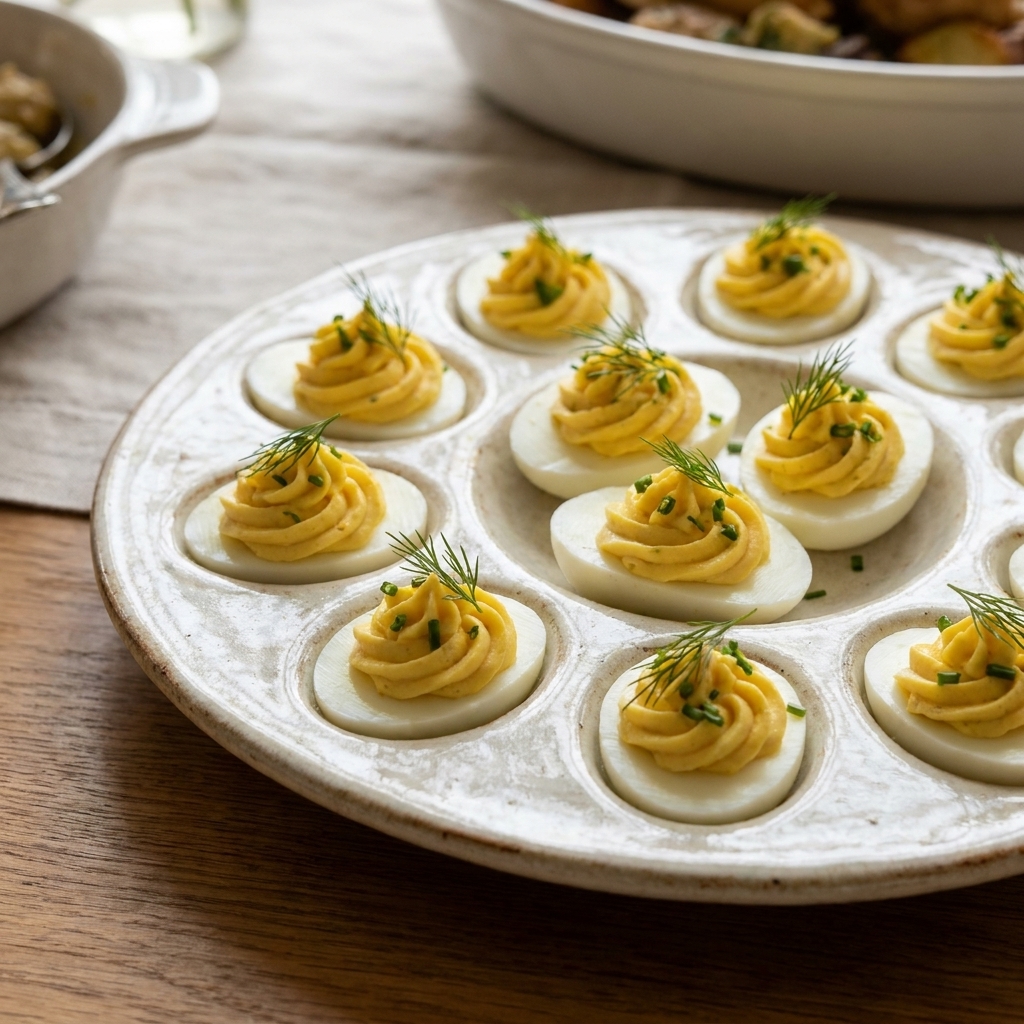
1) Deviled egg platter with wells
Best for: classic deviled eggs, piped eggs, and any topping that likes to slide (caviar, pickled onions, bacon crumbles).
Why it works: Little wells keep egg halves from skating around. They also prevent the dreaded garnish smear on neighboring eggs.
What to look for:
- Wells that are deep enough to cradle the white, not just a shallow dimple.
- A lip or rim for carrying.
- Enough spacing between eggs for fingers.
If your eggs have a tendency to wobble even in wells, it is usually a cutting issue. I cover that (plus peeling and boiling) in how to boil and peel eggs for deviled eggs.
2) Rimmed serving tray
Best for: mixed finger foods, especially if you want to carry the tray through a crowd.
Why it works: A rim saves you from the slow-motion olive roll-off. It also makes it easier to tuck in a little bowl of dip without it drifting.
My trick for deviled eggs: Nestle greens or herbs under the eggs to create grip. A bed of arugula, kale, or even curly parsley helps keep halves from shifting and looks abundant.
3) Compartment tray
Best for: parties where people snack while standing, or when you want to serve multiple items without extra bowls.
Why it works: Built-in sections stop flavors from mingling. This is great if you are serving, say, spicy eggs next to something sweet.
4) Slate or marble board
Best for: short serving windows indoors, especially for a "fancy but effortless" vibe.
Why it works: Stone can feel cooler to the touch than wood and it buys you a little time, especially if you chill it briefly in the fridge before serving.
Important: Stone is still not a refrigerator. If eggs will sit out for a while, follow the timing guidance in deviled egg food safety: how long can they sit out?
Deviled egg stability hacks
If you do not have a platter with wells, you can still keep the eggs from doing that awkward little rock-and-roll across the tray.
- Trim a micro-slice: If an egg half is especially round, shave off a paper-thin sliver from the underside so it sits flatter. Go slow and do not cut through the white.
- Use a filling "anchor": Pipe or spoon a tiny dot of filling onto the tray, then set the egg white on top like glue. (This is also great on slate boards.)
- Choose flatter halves: When you slice the eggs, aim for a clean lengthwise cut right through the center so both halves have a stable base.
Go-to setups by party size
Small (6 to 10 people)
- One two-tier stand: top for deviled eggs, bottom for crackers or crostini.
- One rimmed tray: for anything warm or crumbly.
- One small bowl: for pickles, olives, or nuts.
If you want a deviled-egg-adjacent bite that holds up beautifully on a stand, deviled egg crostini is one of my favorite "looks impressive, eats easy" options.
Medium (12 to 20 people)
- Two-height strategy: one stand for vertical interest, one big platter for volume.
- Duplicate the crowd-pleaser: instead of one giant tray of eggs, do two smaller egg zones so guests are not clustered in one spot.
Big (25+ people)
- Multiple stations: a cold station (eggs, dips, veg) and a warm station (meatballs, sliders).
- Refill containers in the fridge: keep backup eggs chilled and swap trays quickly.
If you are scaling up, my ratios guide is a lifesaver: scaling deviled eggs for a crowd.
Styling rules that work
I grew up in a house where the appetizer spread was basically the main event, and my family’s number one trick was abundance with structure. Not chaos. Here is how to pull that off.
Use the odd-numbers cheat
Group garnishes in threes or fives. Three lemon wedges, five pickles, seven radishes. It looks natural and full without looking like you tried too hard.
Give every tray a border
A border makes food look styled instantly. Easy borders:
- Herbs (dill, parsley, chives)
- Lettuce or kale (yes, the old-school catering trick works)
- Citrus slices
- Pickles or pepperoncini
Mix heights without a stand
Add height using little ramekins or small bowls inside a larger tray. Put olives in a bowl, surround it with eggs or crackers, and suddenly the tray has a focal point.
Keep messy garnishes in check
If you are skipping paprika, there are so many fun toppers that do not migrate everywhere. I keep a big list of ideas in unique deviled egg garnishes (no paprika required).

Where to place the stand
My hosting rule: put the tallest pieces in the center or back, but never where guests have to reach across plates. Height belongs where traffic is lowest.
- Buffet line: tall stand goes at the back corner, not dead center.
- Coffee table: skip tall stands. Use low platters and compartment trays so people can still see each other.
- Kitchen island: this is tiered-stand heaven. Put it near the middle, with napkins and plates at the end so guests are not crossing arms.
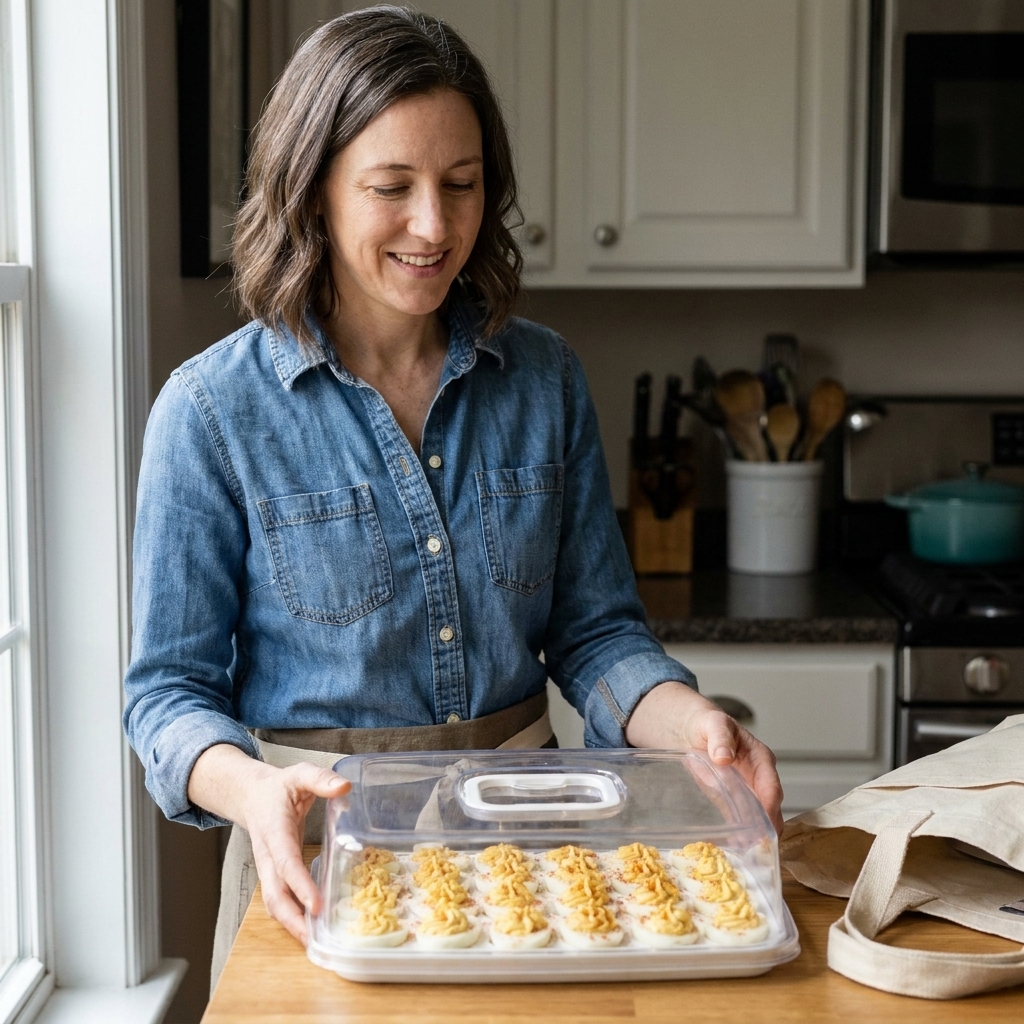
If you are taking food on the road, do not miss how to transport deviled eggs without ruining the presentation. It will save your garnish work, I promise.
Care tips by material
- Slate or marble: Wipe up acidic spills (citrus, vinegar) sooner rather than later to help prevent dull spots. Wash by hand and dry fully.
- Acrylic: Check whether it is dishwasher-safe. Many are not, and heat can warp them. Avoid very hot foods directly on acrylic tiers.
- Metal: Dry promptly to prevent water spots. If it is a decorative metal stand, make sure any serving surface is actually food-safe and not a reactive finish.
- Wood: Do not soak. Dry right away, and avoid long contact with wet foods. If it is sealed, it will do better, but it still is not my first choice for mayo-based bites.
Keep eggs safe on the table
Deviled eggs are a chilled food, so display and timing matter. My favorite low-stress method for parties is the "swap and chill" routine: set out one tray, keep the backup tray cold, then replace after a while rather than topping off warm eggs with cold ones.
- Pre-chill the platter: if it fits, chill it in the fridge for 20 to 30 minutes before filling.
- Use smaller platters: not because they magically stay colder, but because they are easier to rotate and get back into the fridge fast.
- Plan your set-out time: for exact guidance, follow this food safety timeline.
One more practical note: if your filling is a little soft, a tiered stand bounce will not help. If you need a quick save, head to how to fix runny deviled egg filling.
Quick buying checklist
- Base width: wider base equals less wobble.
- Quick stability test: press two fingers on the edge. If it rocks, it is a no.
- Plate size: large enough for fingers to grab, not just to "fit" the food.
- Removable plates: nice for refilling and cleaning.
- Non-slip feet: especially if you have stone counters.
- Storage: nesting trays or collapsible stands are worth it if you host often.
Build a spread with one stand
If you want a party table that looks abundant without buying a dozen serving pieces, start with one tiered stand and then build outward with one board or platter.
My simplest formula:
- Tiered stand: deviled eggs plus one crunchy bite
- Board or rimmed tray: cheese, fruit, cured meats, or a dip moment
- One bowl: olives or nuts
- Two napkin stacks: one near each end, so people do not crowd
If that "board plus eggs" idea sounds like your kind of night, I wrote an entire guide on building a charcuterie board around deviled eggs. It is my favorite style of hosting because it feels special and still lets you actually hang out with your guests.