

In my family, deviled eggs were never a fussy appetizer. They were the first thing to disappear, usually while someone was still taking their coat off. And if there was one “secret ingredient” that got debated louder than the football game, it was mustard. Not how much mustard. Which mustard.
Because mustard is not just a background tang. It’s the personality of the filling. Swap yellow for Dijon, or Dijon for stone-ground, and suddenly the exact same tray of eggs reads as picnic-friendly, cocktail-party polished, or proudly rustic.

The quick answer
If you want the easiest match for most crowds, go with yellow mustard. If you want a more bistro-style bite, go with Dijon. If you want texture and a punchier, artisan feel, reach for stone-ground.
- Best for classic deviled eggs: Yellow mustard
- Best for elevated, elegant eggs: Dijon mustard
- Best for rustic, bold, textured eggs: Stone-ground mustard
Why mustard matters
Most deviled egg fillings are built on a few pillars: yolks, something creamy (often mayo), salt, and acid. Mustard typically brings three things at once:
- Brightness (often from vinegar or wine, depending on the mustard)
- Pungency (that mustard “bite,” which can read as sharp or mellow depending on the style)
- Flavor (vinegar tang, wine notes, or earthy seed flavor)
So when you change mustard, you are not just changing “mustard flavor.” You’re changing the egg’s whole balance point.
Dijon vs yellow vs stone-ground
| Mustard type | Flavor | Heat level | Texture | Best vibe |
|---|---|---|---|---|
| Yellow | Bright, vinegary, classic “American mustard” tang | Mild | Very smooth | Potluck, picnic, kid-friendly |
| Dijon | Smoother, sharper, slightly winey and savory | Medium | Smooth | Cocktail party, brunch, bistro-style |
| Stone-ground | Earthy, robust mustard seed flavor | Medium to bold (varies a lot) | Coarse with visible seeds | Rustic, chef-y, charcuterie-board energy |
Now let’s talk about each one like you are standing in front of your fridge at 4:45 pm, guests coming at 6, trying to decide which jar earns a spot on the counter.
Yellow mustard
Yellow mustard is the deviled egg equivalent of a crisp white button-down. It just works. It’s bright, familiar, and it lets the egg flavor stay front and center.
What it tastes like
- Clean tang
- Mellow bite
- The “classic” deviled egg flavor most people expect
When I pick it
- Big mixed-age gatherings where I want zero surprises
- Potlucks and cookouts
- When my topping is already bold (bacon, pickled jalapeño, Old Bay)
How much to use
For 6 hard-boiled eggs (12 halves), I usually start with 1 teaspoon yellow mustard, then taste. Yellow mustard is forgiving, so it is the easiest to scale up without accidentally making the filling too sharp.
If you need a refresher on getting clean whites (because nothing ruins my hosting mood like mangled egg whites), I keep my method here: How to Boil and Peel Eggs for Deviled Eggs.
Dijon mustard
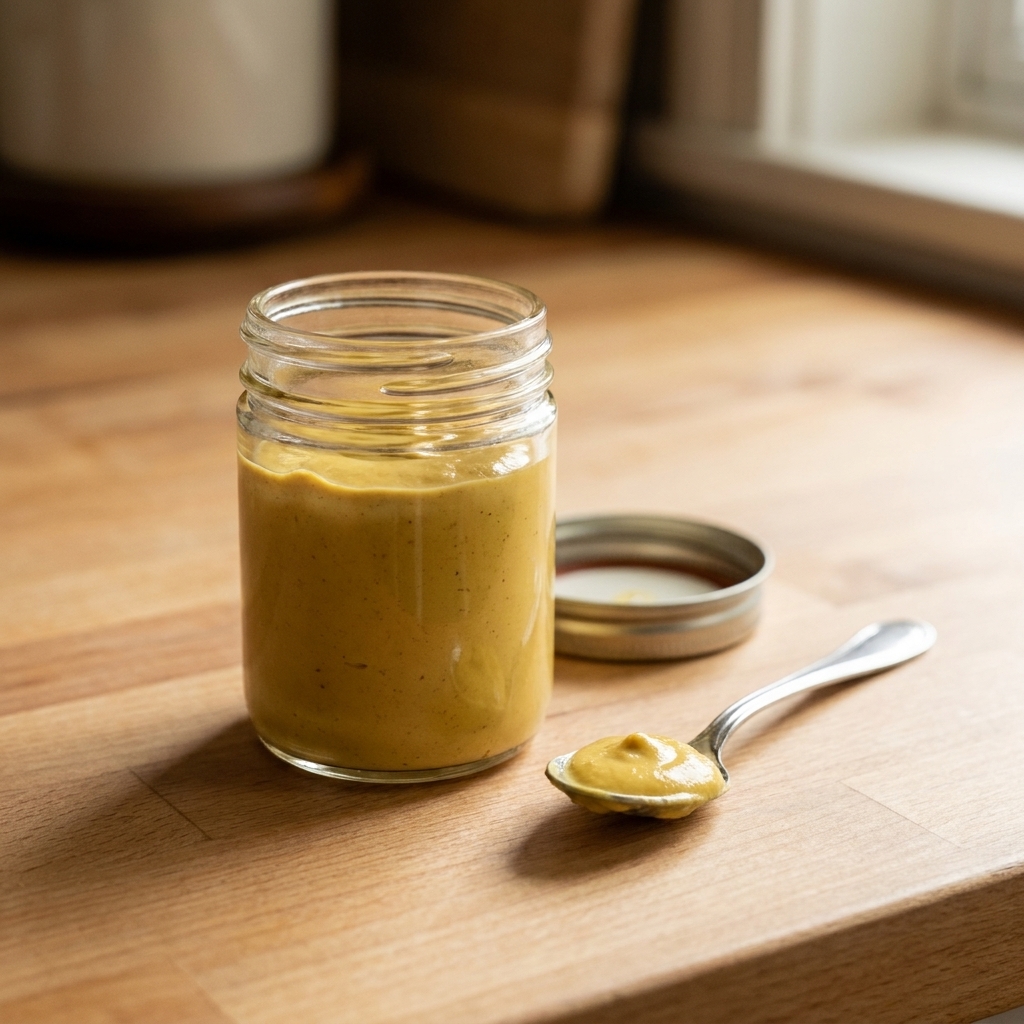
Dijon is what I reach for when the party feels slightly more polished. It gives deviled eggs that bistro snap, like they belong on a restaurant happy-hour menu.
What it tastes like
- Sharper tang than yellow, but still smooth
- A savory edge that reads more refined
- More presence, especially if you keep the filling simple
When Dijon shines
- Brunch spreads (especially with smoked salmon nearby)
- Cocktail parties and holiday appetizer tables
- When you are using cleaner toppings like chives, or a shrimp garnish
How much to use
Dijon can take over fast. For 6 hard-boiled eggs, start with 1/2 to 1 teaspoon, then taste and adjust. If your Dijon is extra punchy, you may prefer 1/2 teaspoon plus a splash of pickle juice or lemon for brightness.
Want them to look as elegant as they taste? Piping does more than any garnish ever will: How to Pipe Deviled Eggs Like a Caterer.
Stone-ground mustard
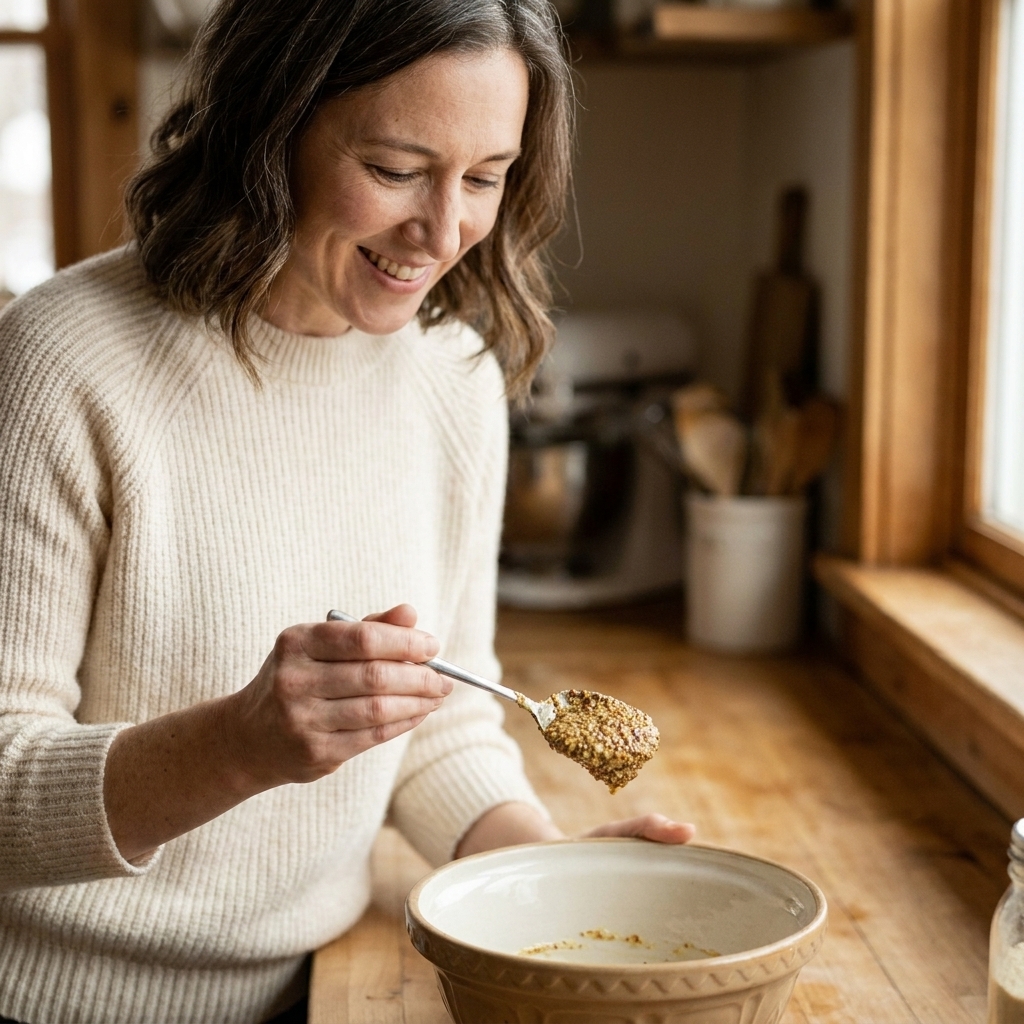
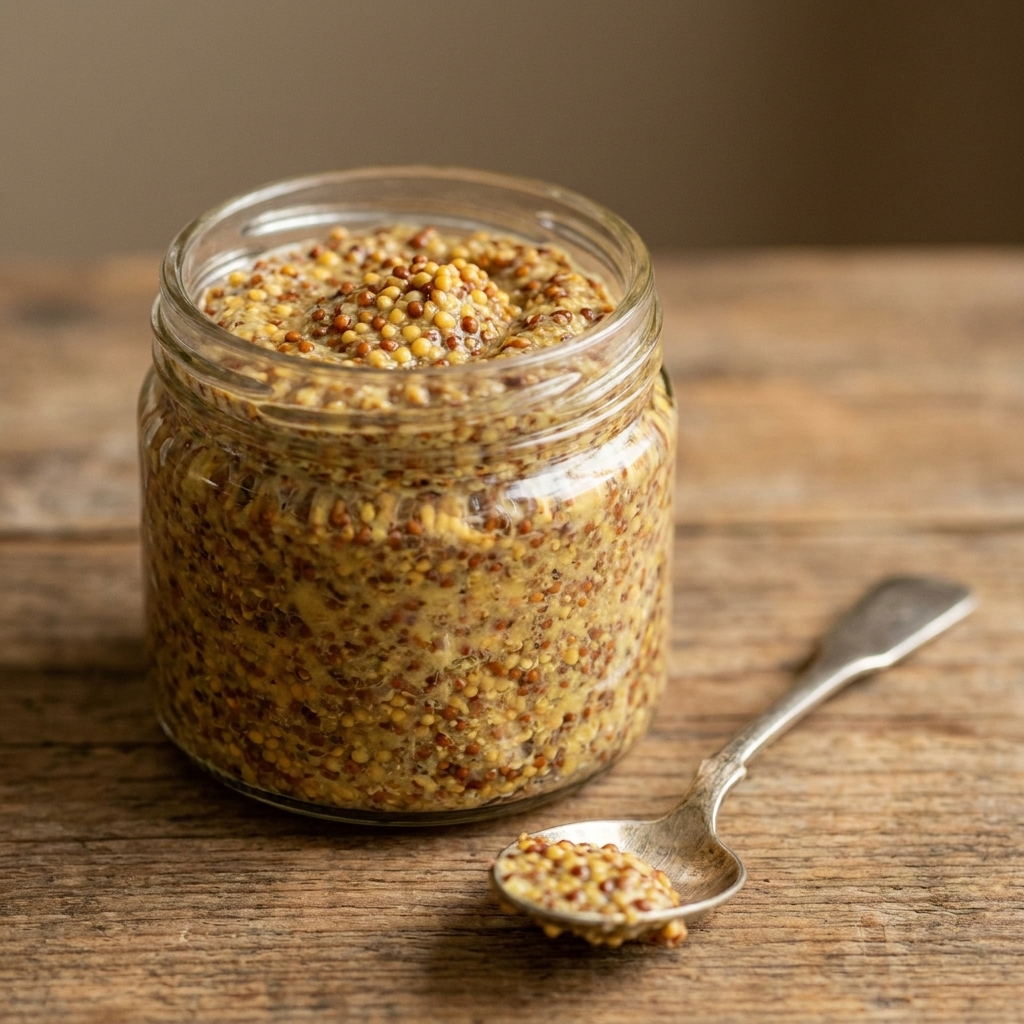
Stone-ground mustard is the jar I pull out when I want the deviled eggs to feel a little more artisanal. It is not subtle, and it is not trying to be. The visible mustard seeds give little pops of flavor, which can be so good with salty toppings.
What it tastes like
- Deeper mustard flavor, often less vinegar-bright and more earthy
- Texture from seeds that makes the filling feel hearty
- Heat can vary wildly brand to brand
When stone-ground is the best choice
- Charcuterie-style appetizer nights
- Fall and winter parties, especially with ham, roast beef sliders, or sausages
- When you are topping with something briny or fatty (cornichons, crispy pancetta, smoked trout)
How much to use
For 6 hard-boiled eggs, start with 1/2 teaspoon. Taste, then add more in 1/4-teaspoon increments. Because stone-ground has texture, a little can feel like a lot.
And yes, spicy brown mustard fits here too. Think of it as stone-ground’s smoother cousin: still bold, usually less seedy, and a great option if that is what you have.
Match the mustard to the party
Backyard BBQ or potluck
Choose: Yellow mustard. It tastes like summer, it is familiar, and it plays nicely with smoky foods.
Holiday appetizer spread
Choose: Dijon or stone-ground. Dijon feels classic and smooth. Stone-ground feels hearty and special. If you are building a full spread, I love planning it like a tray, not a random pile of apps: Plan a Chilled Deviled Egg Party Tray.
Cocktail party
Choose: Dijon. It keeps the filling smooth and more polished, especially if you are doing cleaner garnishes. For more party-ready spins, this roundup is a fun rabbit hole: 10 Gourmet Deviled Egg Variations for Cocktail Parties.
Brunch
Choose: Dijon or yellow. Dijon if your menu leans savory and a little dressier. Yellow if you have a lot of sweet items and you want the deviled eggs to stay gentle and familiar.
My base ratio
Here is the baseline I build from for 6 hard-boiled eggs:
- 6 yolks
- 3 tablespoons mayonnaise
- 1 teaspoon mustard (see below)
- 1 teaspoon pickle juice or a tiny splash of vinegar (optional but I usually do it)
- 1/8 teaspoon kosher salt, then adjust
Adjust the mustard like this:
- Yellow: 1 teaspoon (or up to 1 1/2 teaspoons if you like more tang)
- Dijon: 1/2 to 1 teaspoon
- Stone-ground: 1/2 to 1 teaspoon, depending on how coarse and spicy it is
One practical note from many slightly chaotic party preps: extra mustard and other wet add-ins (like pickle juice) can loosen your filling if you go heavy. If your filling turns loose, don’t panic. I walk through easy fixes here: How to Fix Runny Deviled Egg Filling.
Also, a quick reminder that matters more than people think: Dijon and stone-ground mustards can vary a lot by brand in saltiness, sweetness, and sharpness. Taste as you go, especially if you are switching jars at the last second.
Common mistakes
1) Using stone-ground when you plan to pipe tight swirls
The seeds can clog smaller piping tips. If you want the stone-ground flavor but need a smooth pipe, press the filling through a fine mesh sieve. Then stir in a small spoonful of mayo to loosen it back up if it tightens. Or choose Dijon and add texture with a relish garnish.
2) Going too heavy on Dijon
Dijon’s sharpness can read like heat even when it is not spicy. Start small, taste, then add. You can mellow an over-Dijon filling with a little extra mayo and a pinch more salt.
3) Forgetting to re-salt after switching mustards
Different mustards bring different levels of acidity and saltiness. Always taste after mixing, then adjust salt at the end.
FAQ
Can I mix mustards?
Absolutely. One of my favorite “best of both worlds” combos is yellow + Dijon. You get the classic deviled egg comfort from yellow, plus a sharper edge from Dijon. Start with 3/4 teaspoon yellow + 1/4 teaspoon Dijon for 6 hard-boiled eggs.
What if I do not like mustard?
You can still make deviled eggs you love. Skip mustard and use other sources of tang and seasoning instead, like a little pickle juice, a squeeze of lemon, or a splash of vinegar. If you also want to skip mayo, this approach can be a helpful jumping-off point: No Mayo Deviled Eggs.
How far in advance can I make them?
Mustard-based fillings hold up well, but the whole tray still has a “best window” for texture and freshness. For party planning, this is my go-to timeline: How Far in Advance Can You Make Deviled Eggs?.
How do I keep mustard-forward deviled eggs from smelling too eggy?
Mustard helps, but the bigger factor is how your eggs were cooked and cooled. Avoid overcooking, cool quickly, and store airtight. If you are transporting them, keeping them cold and protected is everything: How to Transport Deviled Eggs Without Ruining the Presentation.
My final pick
If I’m hosting a mixed crowd and I want the tray to disappear fast, I use yellow mustard. If I’m trying to make deviled eggs feel “special” without doing anything complicated, I use Dijon. And when I want people to take a bite and immediately ask, “Wait, what is in this?”, I go stone-ground.
Whichever jar you choose, here is my biggest hosting truth: the best mustard is the one that fits your guests. Deviled eggs are supposed to make people hover near the kitchen island, sneak just one more, and linger a little longer. Mission accomplished.