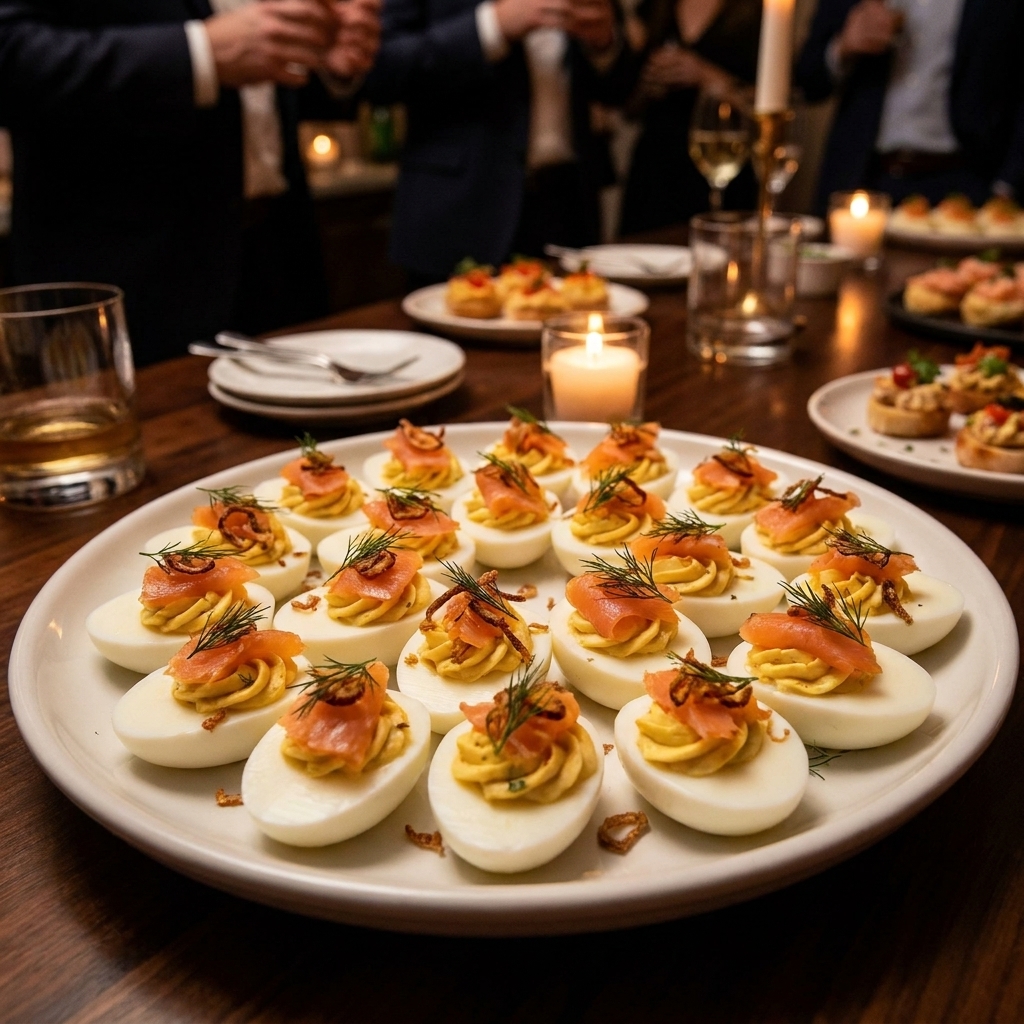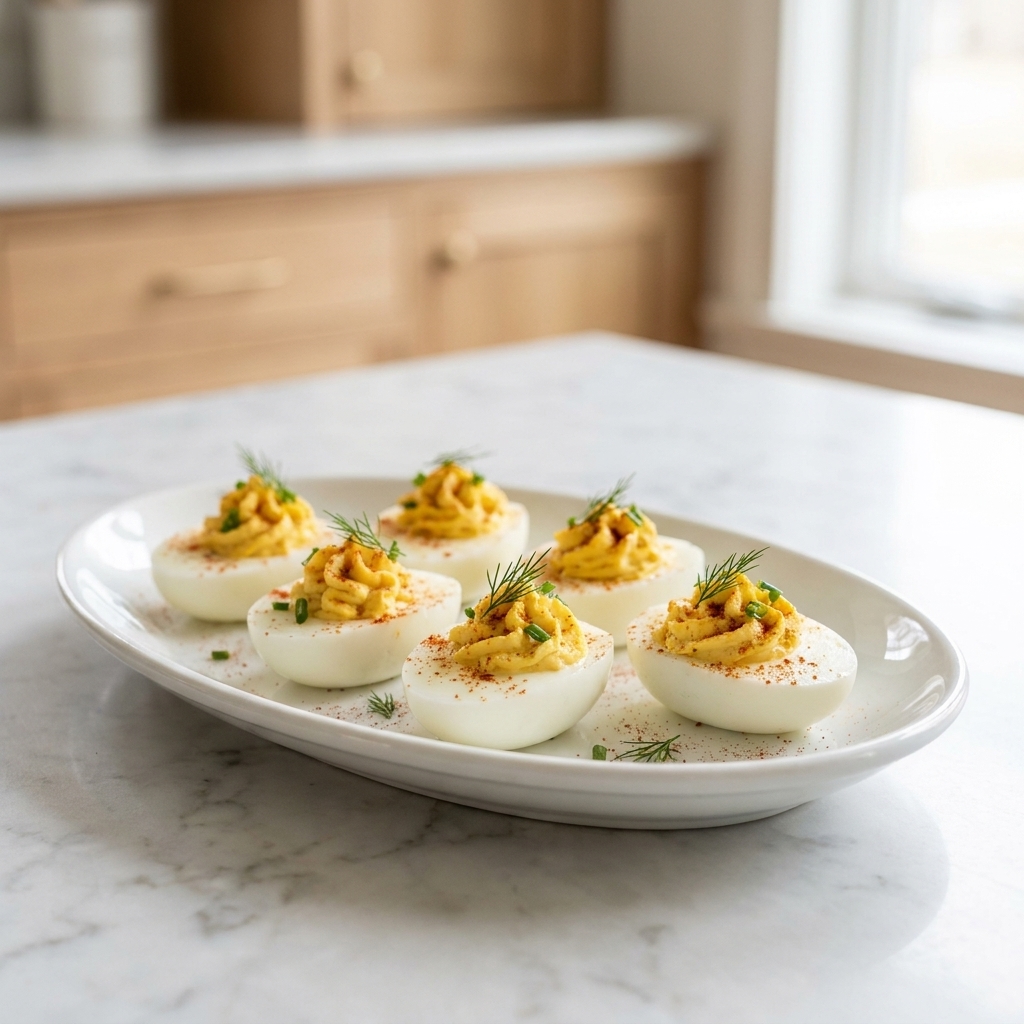

Every New Year’s Eve, I end up in the kitchen island orbit, hovering with a glass in one hand and a tray of something snackable in the other. In my family, the appetizer spread was always the main event, and honestly, I have never outgrown that energy. If you want one platter that makes people pause mid-conversation and say, “Wait, these are deviled eggs?” this is it.
These truffle and caviar deviled eggs are the elegant, dressy version of a familiar favorite. The filling stays classic and creamy, but I fold in a little crème fraîche for that cultured tang and silky texture, then finish each egg with a tiny spoonful of caviar and a restrained hit of truffle (I use truffle oil here, because it is easy and consistent). It tastes like a splurge, but it is not complicated, and it is absolutely doable in a normal home kitchen.
Quick shopping notes: Use the best caviar you are comfortable buying, but do not overthink it. Sturgeon caviar is the classic, and salmon roe is a beautiful, more budget-friendly option. For this batch, 2 teaspoons total gives you that neat “jewel” dot on each egg, and you can always add a touch more if you want the dramatic mound.
A truffle word, because truffle oil is divisive: some truffle oils lean more “aroma” than truffle. If yours smells harsh, skip the drizzle and keep the truffle element subtle in the filling, or swap in a pinch of truffle salt instead. The point is to lift the caviar, not compete with it.
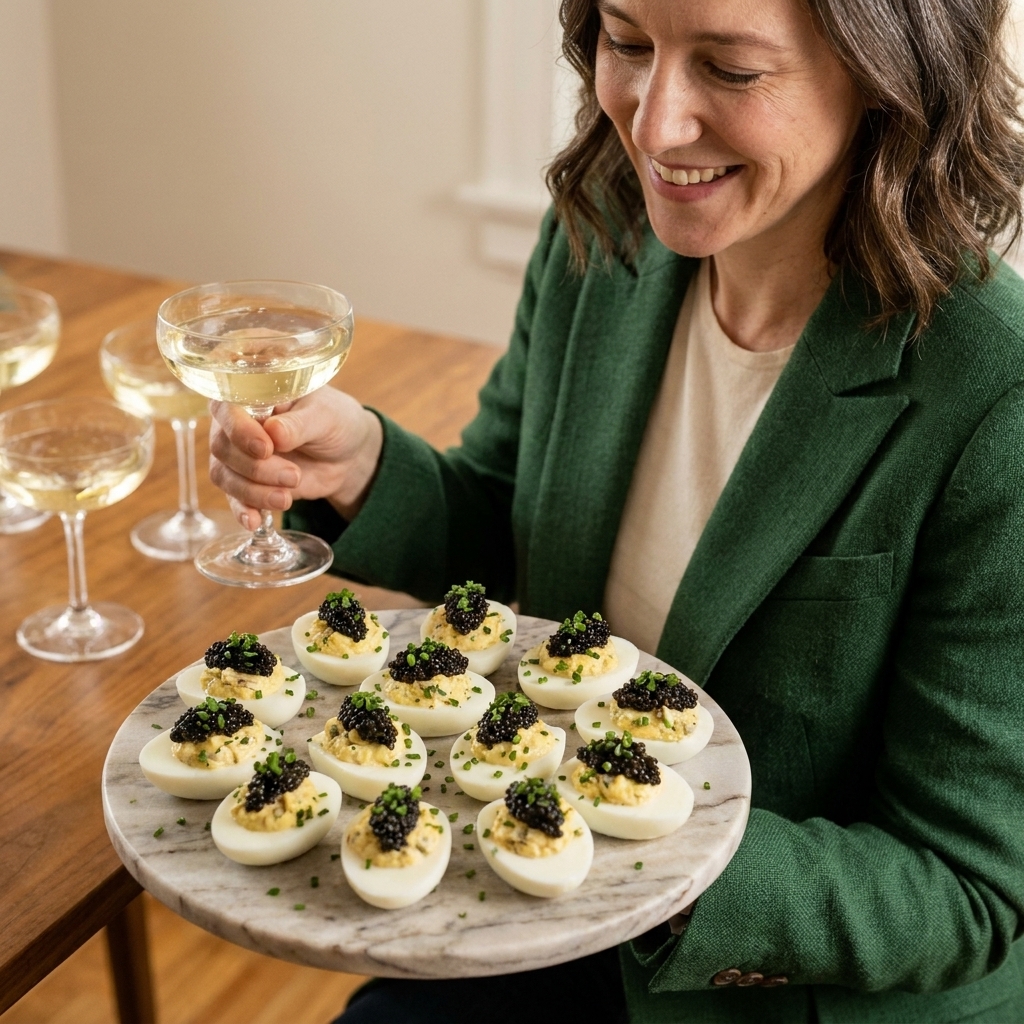
If you want to brush up on the basics first, I walk through my favorite method in How to Boil and Peel Eggs for Deviled Eggs. And if you are planning ahead (my love language), How Far in Advance Can You Make Deviled Eggs? will keep you calm and organized. One more thing: keep the caviar very cold until the moment you serve, since it can dull and weep if it sits around too long, especially at room temperature. For the practical timing and safety side, Deviled Egg Food Safety is my go-to refresher.
Luxurious, not fussy
The goal here is “high-end cocktail party,” not “culinary school final.” You are going to make a smooth filling, pipe it neatly, then top with caviar right before serving so it stays glossy and perky. The truffle element is intentionally restrained because caviar has its own briny magic, and too much truffle can bulldoze everything.
If you have ever struggled with seasoning deviled eggs so they taste balanced instead of flat, my best advice is in How to Balance Deviled Egg Flavors. This recipe is a perfect example of that sweet spot: creamy, salty, tangy, and earthy, with each bite still tasting like egg. For that clean, caterer-style swirl, peek at How to Pipe Deviled Eggs Like a Caterer, and if you are taking these to a party, How to Transport Deviled Eggs Without Ruining the Presentation will save you from the dreaded sliding-egg disaster.
Why it works
- Crème fraîche keeps the filling plush and stable. It brings tang without making the mixture thin, so the piped swirls hold their shape.
- Truffle is used as an accent, not a flood. A small amount in the filling (plus an optional final whisper on top) gives aroma without overpowering the caviar.
- Caviar goes on last for the best texture. You get that clean pop and shine instead of dull, weepy eggs that have been sitting too long.
- Simple garnish, maximum impact. Chives and lemon zest make the platter look intentional and taste brighter.
Ingredient notes
- Eggs: Use large eggs. Slightly older eggs peel easier. If peeling is your nemesis, follow my boiling and peeling method.
- Mayonnaise: A good-quality mayo makes a difference here because the flavors are clean and minimal. If you prefer a no-mayo approach, you can still borrow ideas from No Mayo Deviled Eggs, but for this luxe version I like the classic richness.
- Crème fraîche: Tangy, thick, and luxurious. It also plays nicely with caviar.
- Truffle oil: Use a light hand. Start small, taste, then decide if you want another drop. Truffle oil varies wildly in intensity.
- Caviar: Sturgeon caviar is the classic splurge. If you are keeping it more budget-friendly, look for a good roe labeled as “caviar” or a premium alternative in the refrigerated section. Keep it very cold until serving.
- Lemon: A tiny bit of finely grated zest lifts the whole bite and makes the truffle feel less heavy.
- Chives: The most elegant deviled egg garnish, in my opinion. Snip right before serving for crisp edges.
Equipment
- Medium saucepan with lid (for boiling eggs)
- Large bowl for an ice bath
- Sharp knife (for cleanly halving eggs)
- Fine-mesh sieve (optional, for ultra-smooth yolk filling)
- Mixing bowl and fork or spatula
- Piping bag with a star tip (recommended) or a sturdy zip-top bag with a corner snipped
- Small spoon for caviar (mother-of-pearl is traditional, but a small spoon works fine at home)
- Chilled serving platter or deviled egg tray
Pro tips
- Chill the whites before filling. Cold egg whites are firmer and less likely to tear while you pipe.
- Sieve the yolks if you want a “hotel lobby bar” texture. Pressing yolks through a fine-mesh sieve makes the filling noticeably silkier.
- Season in layers. Salt the filling lightly, then let it sit 5 minutes and taste again. Caviar adds a salty hit later, so do not overdo it.
- Pipe first, top last. Fill the eggs ahead, cover, refrigerate, then add caviar and finishing touches right before guests arrive.
- Use a restrained truffle finish. If you drizzle truffle oil on top, do it with a dropper or the tip of a spoon so it does not run everywhere.
- Serving safety matters. If your party setup runs long, keep the platter chilled. I keep the tray nested over ice for longer cocktail hours. More guidance here: Deviled Egg Food Safety: How Long Can They Sit Out?
Substitutes
- No crème fraîche: Substitute full-fat sour cream. It is slightly sharper, so consider an extra tiny pinch of sugar or a touch more mayo to round it out.
- No truffle oil: Use a very small amount of finely grated truffle cheese, or skip truffle entirely and lean into lemon and chive with the caviar.
- No caviar: Use a small dollop of salmon roe, or go for a “caviar vibe” with finely chopped smoked salmon and a sprinkle of flaky salt. It is different, but still party-worthy.
- Don’t like mayo: You can reduce the mayo and increase crème fraîche, but keep an eye on texture so it stays pipeable.
Variations
- Truffle and caviar with smoked salt: Add a pinch of smoked salt to the filling and skip any top drizzle. It gives a quiet, savory depth.
- Champagne vinegar twist: Replace some or all of the lemon juice with champagne vinegar for a brighter, New Year’s Eve feel.
- White truffle vibe: Use white truffle oil very sparingly and garnish with microgreens instead of chives.
- Extra elegant garnish: Add a paper-thin slice of radish or cucumber tucked beside the caviar for a crisp, clean look.
Serving ideas
- Make it a full platter moment: Serve on a chilled marble board with lemon wedges, a small bowl of extra chives, and a caviar tin nestled in ice so guests can add more.
- Pair with bubbly: These love Champagne, brut sparkling wine, and dry sparkling rosé. For more pairing ideas, see Wine and Cocktail Pairings for Deviled Eggs.
- Build a grazing table around them: Add kettle chips, cornichons, smoked fish, and a creamy dip. If you are doing boards, Build a Charcuterie Board Around Deviled Eggs has my favorite hosting layout tricks.
- Plan the temperature: If you are serving multiple egg styles, a chilled tray keeps everything looking sharp. I outline a simple approach in Plan a Chilled Deviled Egg Party Tray.
Storage
- Best timeline: Make the eggs and filling up to 1 day ahead. Fill the whites up to a few hours ahead. Add caviar right before serving.
- How to store: Store filled eggs in a single layer in an airtight container in the refrigerator. If your container is tall enough, add a paper towel to the lid to catch condensation.
- Transporting: Keep them cold and stable. A dedicated carrier is ideal, but you can also nest a container in a cooler with ice packs. More help here: How to Transport Deviled Eggs Without Ruining the Presentation.
- Leftovers: Caviar-topped eggs are best the same day, but leftovers are still delicious within 1 to 2 days refrigerated. If you have extra filling, How to Repurpose Leftover Deviled Eggs has snacky ideas.
Mistakes
- Going too heavy with truffle oil: This is the most common issue. If the filling suddenly tastes like perfume, add more yolk mixture base (extra yolk) or a little more mayo and lemon to dilute and rebalance.
- Over-salting the filling: Remember the caviar is salty. Keep the base pleasantly seasoned, not aggressively salty.
- Warm eggs = messy filling: If your filling looks loose or greasy, chill it for 15 to 20 minutes before piping.
- Ragged egg whites: Use a sharp knife and wipe it between cuts. If your whites are a little wobbly, trim the tiniest sliver off the bottom so they sit flat.
- Runny filling that will not hold a swirl: Add more yolk, or chill the filling to firm it up. For a deeper fix-it list, see How to Fix Runny Deviled Egg Filling.
- Adding caviar too early: It dulls and can weep. Top right before serving for that glossy, jewel-box look.
FAQ
How much caviar do I need for deviled eggs?
Plan on about 1 to 2 teaspoons total for 12 deviled egg halves if you are doing a small, classy “dot” on each. If you want the more dramatic, generous mound, you will use more. I like to start modest and offer extra at the platter.
Can I make truffle and caviar deviled eggs ahead of time?
Yes, with one important rule: make the eggs and filling ahead, fill the whites ahead if you like, then add caviar right before serving. For timing options, see How Far in Advance Can You Make Deviled Eggs?.
What kind of truffle product works best?
For home entertaining, truffle oil is the easiest and most consistent. Choose one you actually enjoy the smell of, and use a small amount. You can always add another drop, but you cannot take it back.
Do I need a piping bag?
No, but it makes the platter look extra polished. A zip-top bag with a corner snipped works in a pinch. If you want that caterer-style swirl, I share piping tricks in How to Pipe Deviled Eggs Like a Caterer.
How do I keep deviled eggs cold at a party?
Serve them on a chilled platter, or set the serving tray over a shallow bed of ice for longer cocktail hours. For safety timing, follow Deviled Egg Food Safety.
Recipe
Truffle and Caviar Deviled Eggs
Luxurious deviled eggs made with crème fraîche, a hint of truffle oil, and a glossy spoonful of caviar on top. The ultimate elegant New Year’s Eve appetizer.
- Prep
- 25 minutes
- Cook
- 12 minutes
- Total
- 1 hour 10 minutes
- Servings
- 12 deviled egg halves
Ingredients
- 6 large eggs
- 1/3 cup mayonnaise
- 2 tbsp crème fraîche
- 1 tsp Dijon mustard
- 1 to 2 tsp fresh lemon juice
- 1/4 tsp kosher salt, plus more to taste
- 1/8 tsp black pepper
- 1/2 tsp truffle oil, plus more for an optional finishing drizzle
- 2 tsp caviar (or more, to taste), kept very cold
- 1 tbsp finely chopped fresh chives
- 1/2 tsp finely grated lemon zest (optional)
Instructions
- Boil the eggs. Place the eggs in a medium saucepan in a single layer and cover with cold water by 1 inch. Cover with a lid and bring to a boil over high heat. As soon as the water reaches a boil, turn off the heat and keep the pan covered for 12 minutes.
- Ice bath and peel. Transfer the eggs to a bowl of ice water and chill for 10 to 15 minutes. Peel the eggs and pat dry.
- Halve and separate. Slice each egg in half lengthwise with a sharp knife. Carefully pop the yolks into a mixing bowl and place the whites on a tray or platter.
- Make the filling. Mash the yolks with a fork until very fine (or press through a fine-mesh sieve for extra smoothness). Add the mayonnaise, crème fraîche, Dijon, 1 teaspoon lemon juice, salt, pepper, and 1/2 teaspoon truffle oil. Mix until creamy and smooth.
- Taste and adjust. Taste the filling. Add more lemon juice (up to 1 additional teaspoon) and more salt if needed. Keep in mind the caviar will add saltiness on top.
- Pipe or spoon into whites. Transfer the filling to a piping bag fitted with a star tip (or a zip-top bag with a corner snipped). Pipe the filling into the egg whites in neat swirls.
- Chill briefly. Refrigerate the filled eggs for at least 20 minutes so the tops firm up and look clean and defined.
- Finish right before serving. Top each deviled egg with a small spoonful of caviar. Garnish with chives and (optional) a tiny pinch of lemon zest. If desired, add the lightest drizzle of truffle oil, using just a drop or two across the platter rather than soaking individual eggs.
- Serve cold. Serve immediately, or keep the platter chilled until guests arrive.
Notes
- Make-ahead: You can boil and peel the eggs up to 2 days ahead. You can make the filling up to 1 day ahead. For the best look, top with caviar right before serving.
- Truffle oil intensity varies: Start with 1/2 teaspoon, then decide if you want more. A little goes a long way.
- For extra-stable piping: If your kitchen is warm, chill the filling 10 to 15 minutes before piping.