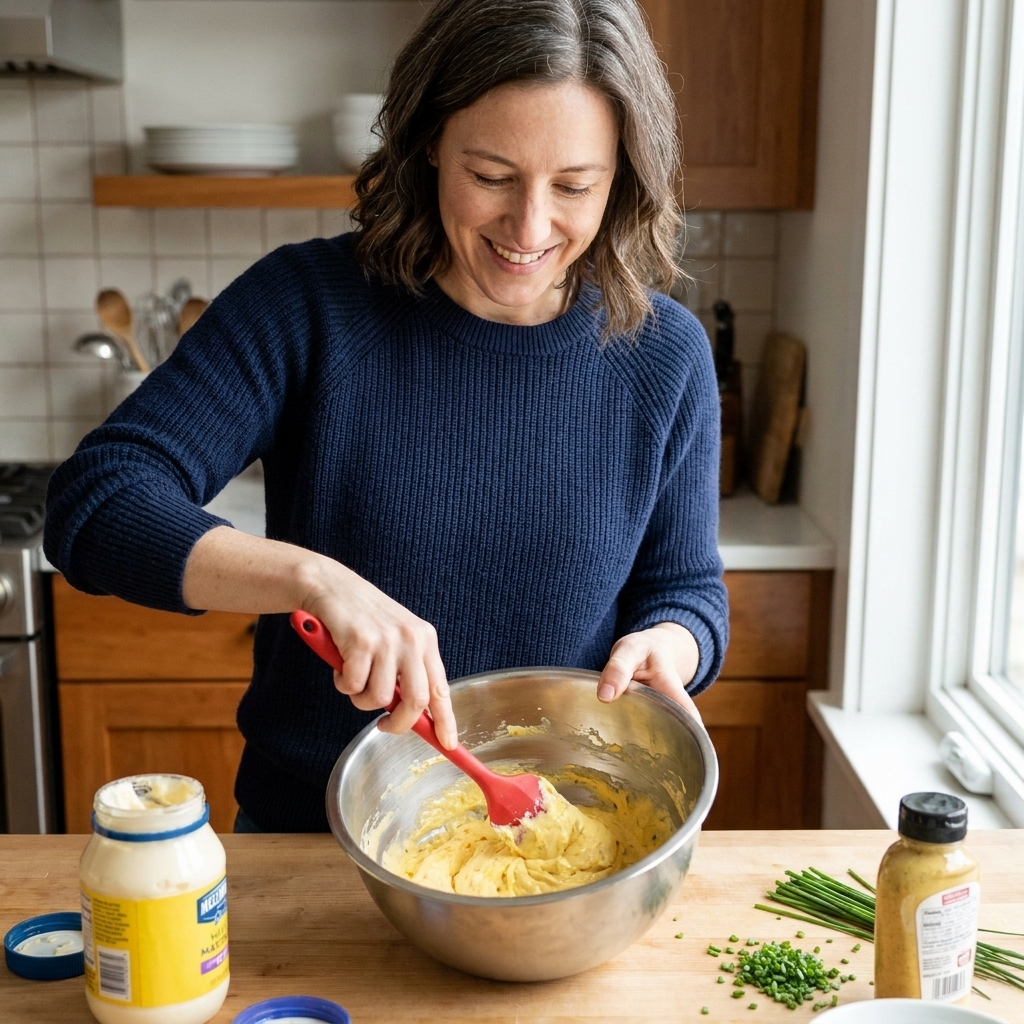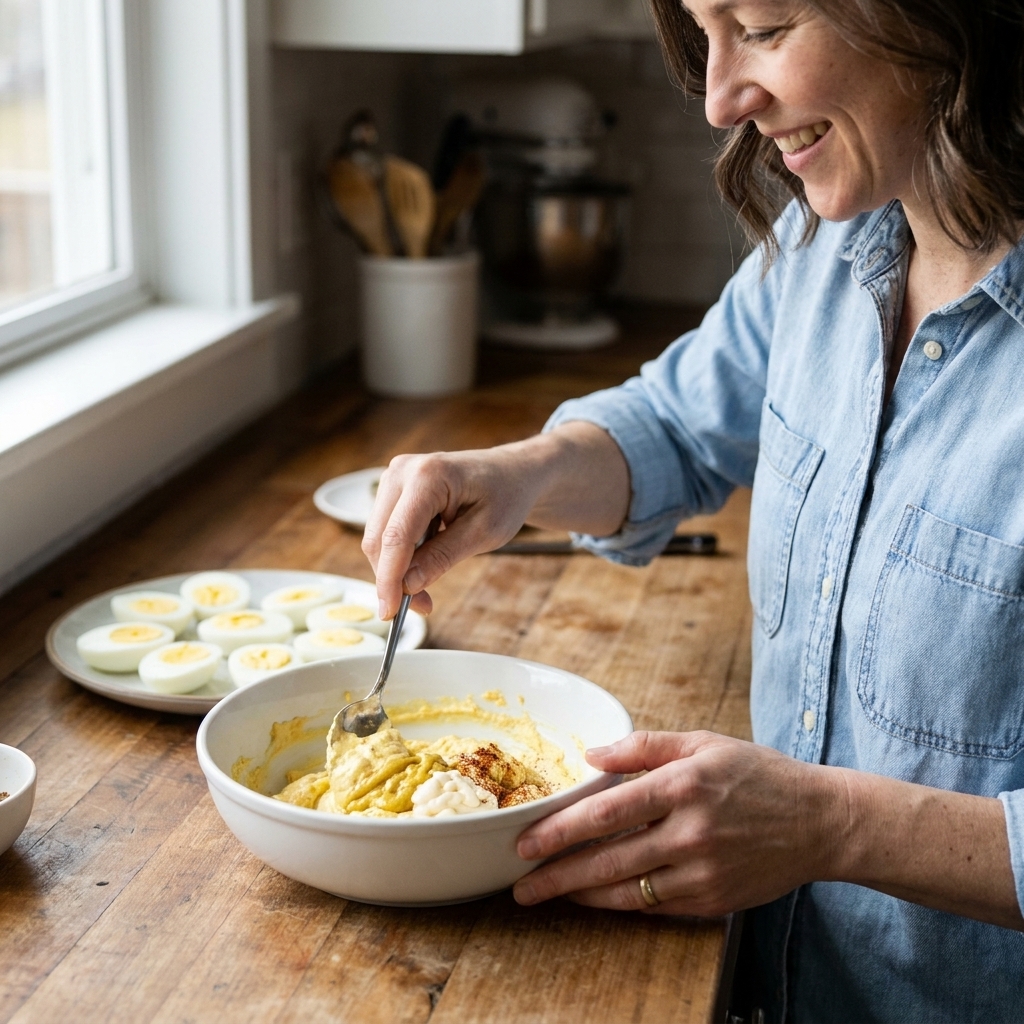

I have hosted enough holiday mixers to know this is the kind of tiny kitchen decision that can quietly make or break your mood: do you pull out the food processor for deviled eggs, or do you mash the yolks by hand and call it good?
Both methods work. They just give you very different fillings, and once you know what each one does best, you can pick the right tool on purpose instead of on autopilot.

The real difference is texture
Deviled egg filling lives or dies on mouthfeel. The flavor can be perfect, but if the texture is off (grainy, dense, runny, or oddly airy) people notice.
- Hand mashing gives you a more rustic filling with tiny bits of yolk and add-ins that read as homemade and hearty.
- Food processor gives you a smoother, more uniform filling that pipes beautifully and tastes a little more “catered.”
If you already know you want ultra-silky filling, the food processor is the easier path. If you love texture and visible flecks of pickles, herbs, or bacon, hand mashing can actually be better.
Quick verdict
Here is my honest hosting answer: the best method is the one that matches how you plan to serve the eggs.
- For fancy trays, clean piping, and a smooth bite: food processor wins.
- For casual parties, picnic-style eggs, and chunky mix-ins: hand mashing wins.
- For most home hosts (me included): a hybrid approach is the sweet spot. Mash the yolks smooth first, then stir in chunky add-ins by hand.
Food processor filling
What it does best
- Ultra-smooth texture: Great for people who dislike grainy yolks.
- Fast mixing: Especially helpful when scaling up for a crowd.
- Even seasoning: Mustard, salt, vinegar, and mayo distribute very evenly.
- Best for piping: Smooth filling flows through tips without clogging. If piping is your goal, also see how to pipe deviled eggs like a caterer.
Where it can go wrong
- Overprocessing can turn it dense: If you let the machine run too long, the filling can go from silky to a thicker, pastier texture.
- It can get too loose: Because everything breaks down fast, it is easy to overshoot. The tell is simple: it slumps in the bowl and will not hold a soft peak.
- Small batches can be annoying: If you are only making a few eggs, the yolks can bounce around and blend unevenly unless you scrape often. A mini food processor can help, but it still needs frequent scraping because the volume is so small.
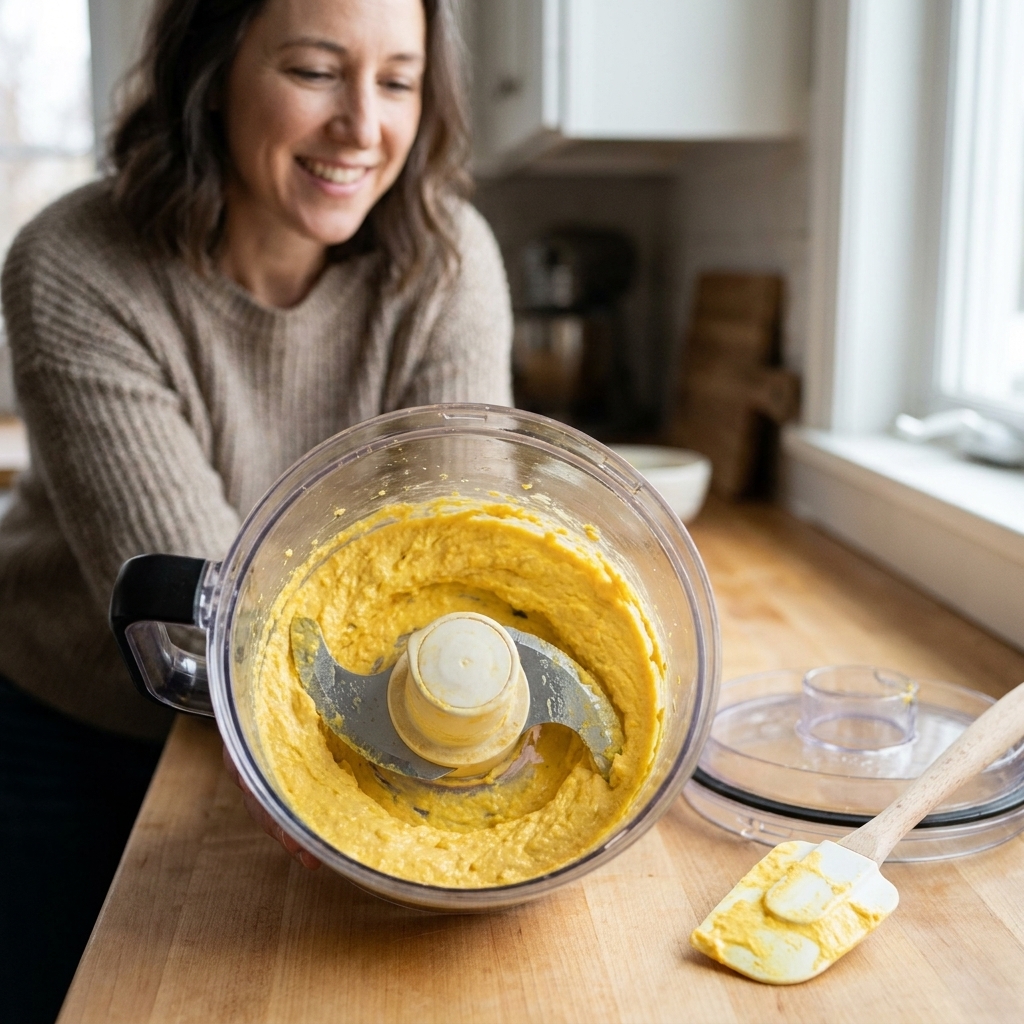
My food processor method
- Start with dry yolks: Put yolks in the bowl first and pulse to break them up before adding any mayo or liquids.
- Add creamy ingredients next: Mayo, Greek yogurt, sour cream, or avocado, depending on your recipe.
- Add acids slowly: Vinegar, pickle juice, lemon juice, or hot sauce should go in a little at a time. It is much easier to thin later than to fix runny filling.
- Pulse, do not run: Short pulses give you control and reduce the risk of going airy or pasty.
- Scrape once or twice: Especially with smaller batches, scraping the sides is the difference between silky and uneven.
If your filling does go loose, you can usually rescue it. I keep a full troubleshooting playbook here: how to fix runny deviled egg filling. If you need a quick save in the moment, try chilling the filling for 20 to 30 minutes, or mash in an extra cooked yolk to thicken it without changing the flavor much.
Hand-mashed filling
What it does best
- Better control over texture: You choose chunky, mostly smooth, or somewhere in between.
- Less risk of overworking: It is harder to accidentally make the filling dense by hand.
- Perfect for mix-ins: Chopped pickles, capers, crispy bacon, minced jalapeno, or herbs stay distinct.
- Less cleanup: One bowl, one fork or potato masher, and you are done.
Where it can go wrong
- Grainy yolks: If you do not mash thoroughly before adding mayo, you can lock in little dry bits.
- Uneven seasoning: Mustard and salt need proper mixing or you will get occasional sharp bites.
- Harder to pipe: Chunkier filling can clog smaller piping tips or tear the egg whites when you try to force it through.
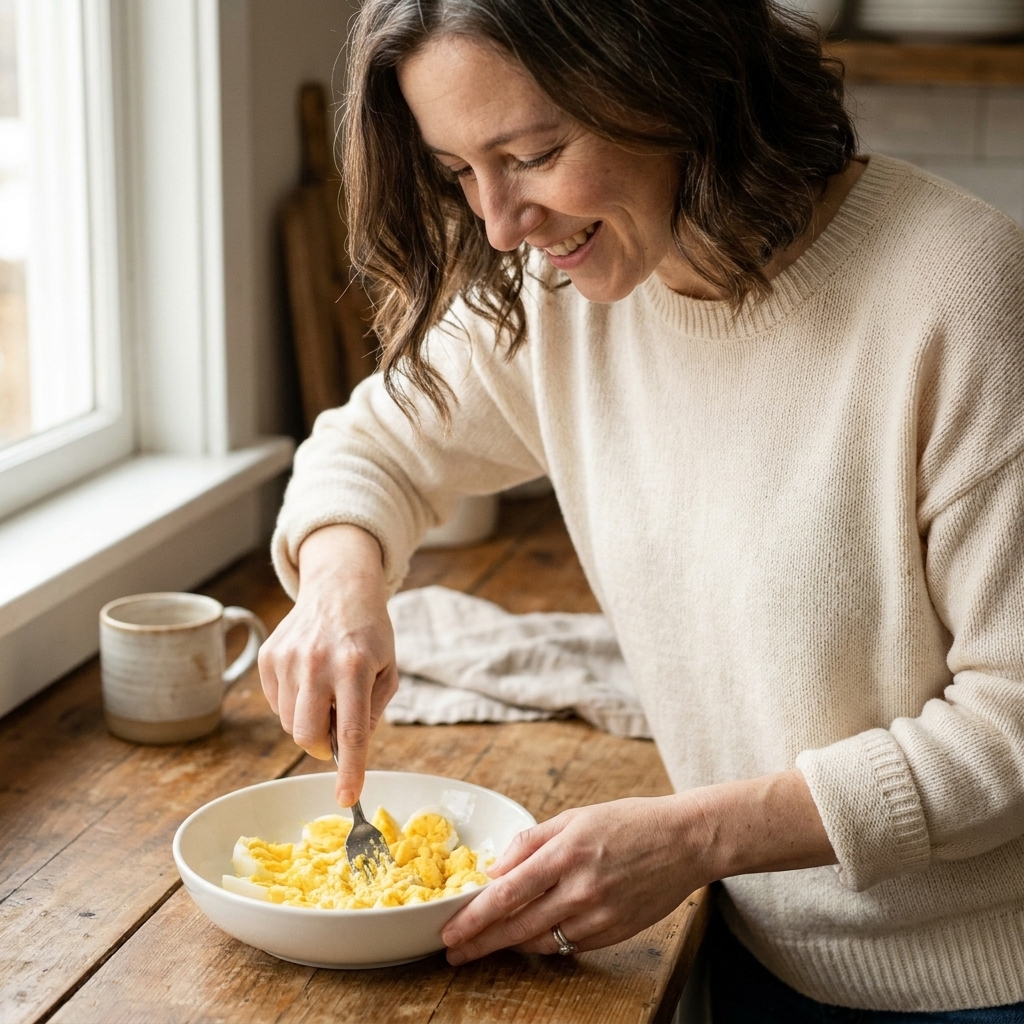
My hand-mash method
- Pick your tool: A fork works, a small potato masher is faster for big bowls, and a fine-mesh sieve gives you the smoothest hand-mashed texture if you want to go all-in.
- Mash yolks first, completely: Do this before adding anything wet. I press the yolks against the side of the bowl until they look like fine crumbs.
- Add mayo in two additions: Stir in half, smooth it out, then add more only if needed.
- Add mustard and acid last: This keeps you from thinning too early. For mustard choices, see the best mustard for deviled eggs.
- Finish with mix-ins: Fold in chopped items at the end so they stay chunky and pretty.
Side-by-side comparison
| Factor | Food Processor | Hand Mashing |
|---|---|---|
| Texture | Very smooth, uniform | Rustic to semi-smooth, you control it |
| Best for | Piped eggs, elegant presentation | Chunky add-ins, casual serving |
| Speed | Fast for big batches | Fast for small batches |
| Cleanup | More parts to wash | Minimal |
| Risk | Overprocessing, loose filling | Grainy bits if under-mashed |
| Batch size | Works best with medium to large batches | Works with any size |
My favorite compromise
If you want filling that feels smooth and luxurious but still has personality, do this:
- Use a fork (or potato masher) to mash yolks until fine and crumbly.
- Stir in mayo and mustard until creamy.
- Switch to a spatula and fold in chunky ingredients like chopped pickles, bacon, or herbs.
This gives you that classic deviled egg comfort but avoids the two big problems: grainy yolks and overworked paste.
Texture targets
Chunky and rustic
- Use: hand mashing only
- Add-ins: chopped pickles, relish, crumbled bacon, minced celery
- Serving style: spooned or rustic dolloped
Classic creamy
- Use: hand mashed very thoroughly, or quick food processor pulses
- Add-ins: small amounts of finely minced herbs, very finely chopped pickles
- Serving style: spooned or piped with a wider tip
Ultra-smooth, bakery-style swirls
- Use: food processor (pulse and scrape), or push mashed yolks through a fine-mesh sieve first if you are feeling extra
- Add-ins: powders and smooth sauces, not chunky bits
- Serving style: piped neatly
Flavor matters too. If you are struggling with “something is off,” it is usually salt, acid, or sweetness balance. This guide helps: how to balance deviled egg flavors.
Small batch vs. crowd size
For 6 to 12 eggs (12 to 24 halves)
I usually hand mash. It is faster than digging out a machine, and you get excellent control.
For 24 to 60 eggs (48 to 120 halves)
Food processor starts to make sense, especially if you are doing multiple flavors. If you are scaling, this ratio guide saves a lot of mental math: scaling deviled eggs for a crowd.
Tips that matter more than the tool
- Start with well-cooked, easy-to-peel eggs: Clean whites make everything feel more polished. I use this method every time: how to boil and peel eggs for deviled eggs.
- Take the chill off the yolks: Cold, fully cooked yolks can feel firmer and resist blending. Let them sit out just long enough to lose the refrigerator edge (about 10 minutes), then get everything back in the fridge.
- Add liquid slowly: Especially pickle juice, vinegar, and hot sauce.
- Season in layers: A pinch of salt early, then adjust at the end.
- Chill before serving: Filling firms up as it chills, and flavors round out.
FAQs
Does a food processor make deviled egg filling fluffy?
It can. If you run it continuously, you incorporate more air and the filling can taste lighter, but it can also go a little dense and pasty. Pulsing gives you smoothness without whipping it into a mousse.
Is a hand mixer better than a food processor?
A hand mixer can make a very smooth filling, but it is also quick to overwhip and splash. If you use one, mash yolks first, then mix on low just until creamy.
How do I keep filling from getting runny in the food processor?
Hold back some of your mayo, add acids slowly, and pulse. If it still turns loose, use the fixes here: how to fix runny deviled egg filling.
Can I make deviled egg filling ahead either way?
Yes. Both methods hold up well as long as you store the filling airtight and keep it cold. Timing and storage details are here: how far in advance can you make deviled eggs.
What if I want smooth filling but no mayo?
You can still get a creamy texture with alternatives like Greek yogurt, avocado, or a no-mayo base. I keep options here: no mayo deviled eggs.
My bottom line
If I am bringing deviled eggs to a party where presentation matters, I use the food processor and pulse my way to smooth filling. If I am hosting friends in my own kitchen and I want that cozy, scoopable, classic vibe, I mash by hand and proudly leave a little texture.
Either way, the “best” deviled egg filling is the one that tastes balanced, holds its shape, and makes people hover near the appetizer tray like it is the main event. That is my kind of party.